Rant
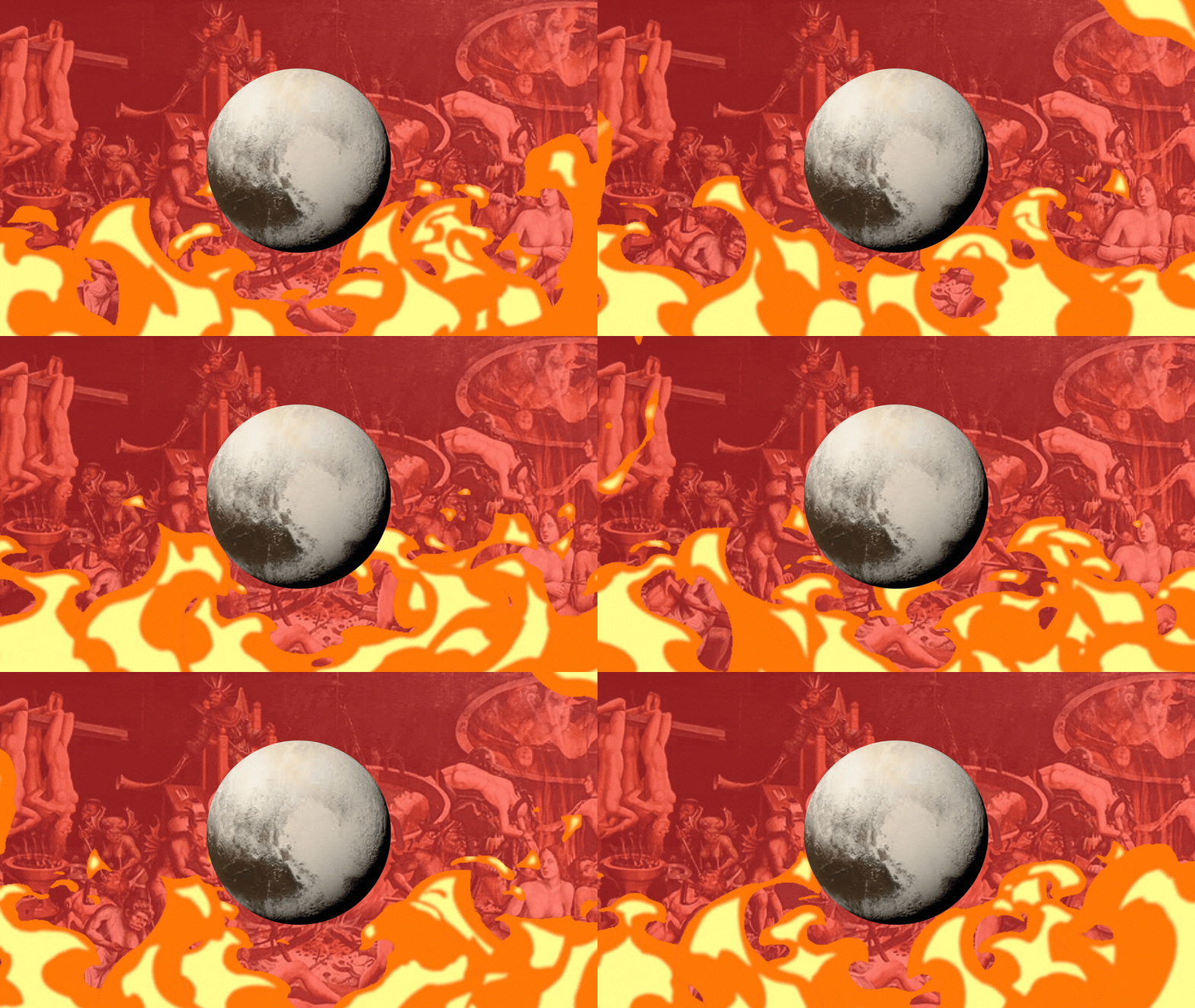
Pluto is MAGA's favorite "planet" for a reason
Jared Isaacman's Pluto push is a master class in science populism

Let's talk about science, science communication, and how knowledge matters

TLDR
I am weirdly hopeful that it could be easier to notice biased AI than biased humans?
Science Communication
Technically correct is not, in fact, the best kind of correct in scicomm
Citizen science revealed a shared "taste for the beautiful" across species
Patterns are a shorthand for reality

New research shows that the X algorithm pushes people to the political right

Pop sci readers are wealthy, educated, and left-leaning
A plea and a note on science communication

Barbara Molz found supposedly extinct ancient gene variants in hundreds of modern humans. They don't seem to do much.
Science, scicomm, and how to make knowledge matter

The "AI Scientist" is mediocre and uninspired. Don't dismiss it.

Timo Damm blends qualitative and quantitative research to understand how small groups push for change
Citizen science revealed a shared "taste for the beautiful" across species

Science is the generational project of finding out true things about the real world — and that project needs catalogers

This is awesome, but does not mean life fell to Earth from space

How much are researchers — especially marginalized researchers — expected to endure just to stay in science?

Not everything in biology evolved for a purpose.
This is why neural networks are linear algebra under the hood

Here's what it means for the origin of life
Patterns are a shorthand for reality
New research shows that the X algorithm pushes people to the political right
James Sáenz studies how fatty molecules might have helped life get started