The individual isn't what it used to be
Tim Waring thinks human evolution is shifting from genetic and individual to cultural and collective


Many of us experience a kind of horror at the thought of losing ourselves. The primary antagonist of Star Trek: The Next Generation and Star Trek: Voyager is a hive mind called the Borg that assimilates any individual living things or technologies it comes in contact with into its Collective. They're like space ants, complete with a queen — except if ants could turn their prey into fellow ants rather than just eating it. The moral of the Borg arc is essentially that the homogenous collective degrades the whole and that diversity and individuality are worth fighting for. Resistance is not futile.
On the other hand, I'd argue there are strains of ascendant politics that clearly reflect some kind of anti-individual longing be subsumed in some grand collective project that goes far beyond the self. Less dramatically, a certain degree of willingness to make personal sacrifices for one's community — and not just blood-relatives — is generally seen as morally good. Loss of self or ego death is a common experience reported by people who take psychedelic drugs; melting into the universe is either terrifying or euphoric or both, depending who you ask. We humans seem to have an ambivalent relationship to the idea of being part of a greater whole: fear and longing all at once.
Perhaps that's what you'd expect from a species of individuals on the road to becoming collectives.
Tim Waring, an ecologist studying anthropology in the economics department at the University of Maine, thinks we are such a species. For several decades he's studied how culture and genetics interact to shape human evolution and has concluded that our species is in the middle of an evolutionary transition in individuality — a shift, like the jump from single cells to multicellular animals, in what counts as a biological individual. And he's eager to move the conversation past sci-fi speculation (sorry, Tim, I couldn't resist opening with the Borg) and into the realm of testable theory.
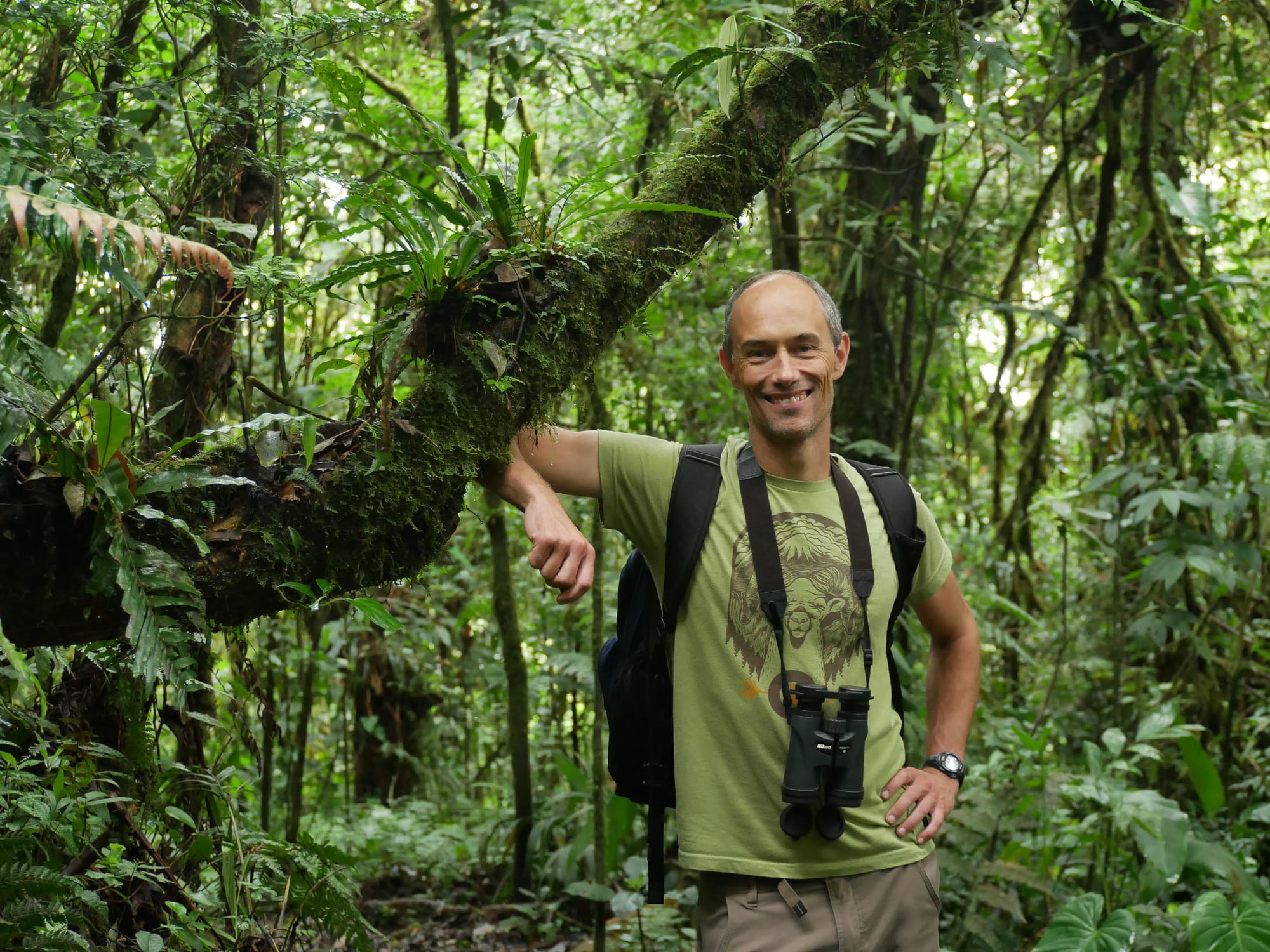
In a recent paper, Tim and his colleague Zachary Wood outlined a theoretical framework for a human evolutionary transition in individuality that they think could cut a path towards concrete predictions and empirical tests of the hypothesis. Their core insight was to identify two distinct forces that, operating in parallel, could trigger a positive feedback loop that accelerates our species towards a new collective existence in which culture, not genes, is the most important information passed down the generations. These forces are: 1) the degree to which cultural adaptation influences fitness more than genetic adaptation, and 2) the degree to which an individual's fitness is determined by the group she belongs to rather than her own characteristics. Based on this simple framework, Tim and Zach make several predictions about what we could expect from our species if we really are undergoing this kind of dual transition from individuals under Darwinian selection on genes to groups under selection on cultural traits. In the near future, Tim plans to test some of them against real-world data — an important step if this field is going to move from philosophy of biology circles into more empirical ones.
This post is more than 2 weeks old. To unlock the archive, support my work by becoming become a paid subscriber.