Paper Roundup November 2025: Mars lightning, language processing, and autism microbiome
This month's curated list of interesting new papers

Every month, I publish a curated list of new scholarship on big ideas at the frontiers of science. Inclusion is not endorsement. Think something should be included in next month's paper roundup? Shoot me an email at elise@reviewertoo.com.
If you liked this newsletter, why not share it with a friend or post it on Bluesky or wherever else you hang out online? That's the best way to help this project continue!
Don't miss next month's newsletter!
Highlights
The sound of Mars lightning
Detection of triboelectric discharges during dust events on Mars (Nature, November 26) by Baptiste Chide, Ralph D. Lorenz, Franck Montmessin, Sylvestre Maurice, Yann Parot, Ricardo Hueso, German Martinez, Alvaro Vicente-Retortillo, Xavier Jacob, Mark Lemmon, Bruno Dubois, Pierre-Yves Meslin, Claire Newman, Tanguy Bertrand, Grégoire Deprez, Daniel Toledo, Agustin Sánchez-Lavega, Agnès Cousin, and Roger C. Wiens
Mars has some truly wild dust devils: its tornado-like columns of spinning dust can be kilometers high. And any time you're throwing dust around in dry air, you're wont to build up static electricity. We still don't really know why or how — static is weirdly mysterious — but it happens. And now, thanks to some lucky observations captured by the Perseverance's SuperCam microphone, scientists have strong evidence that this static charge discharges in crackles of "mini lightning" on Mars.
 #author.fullName}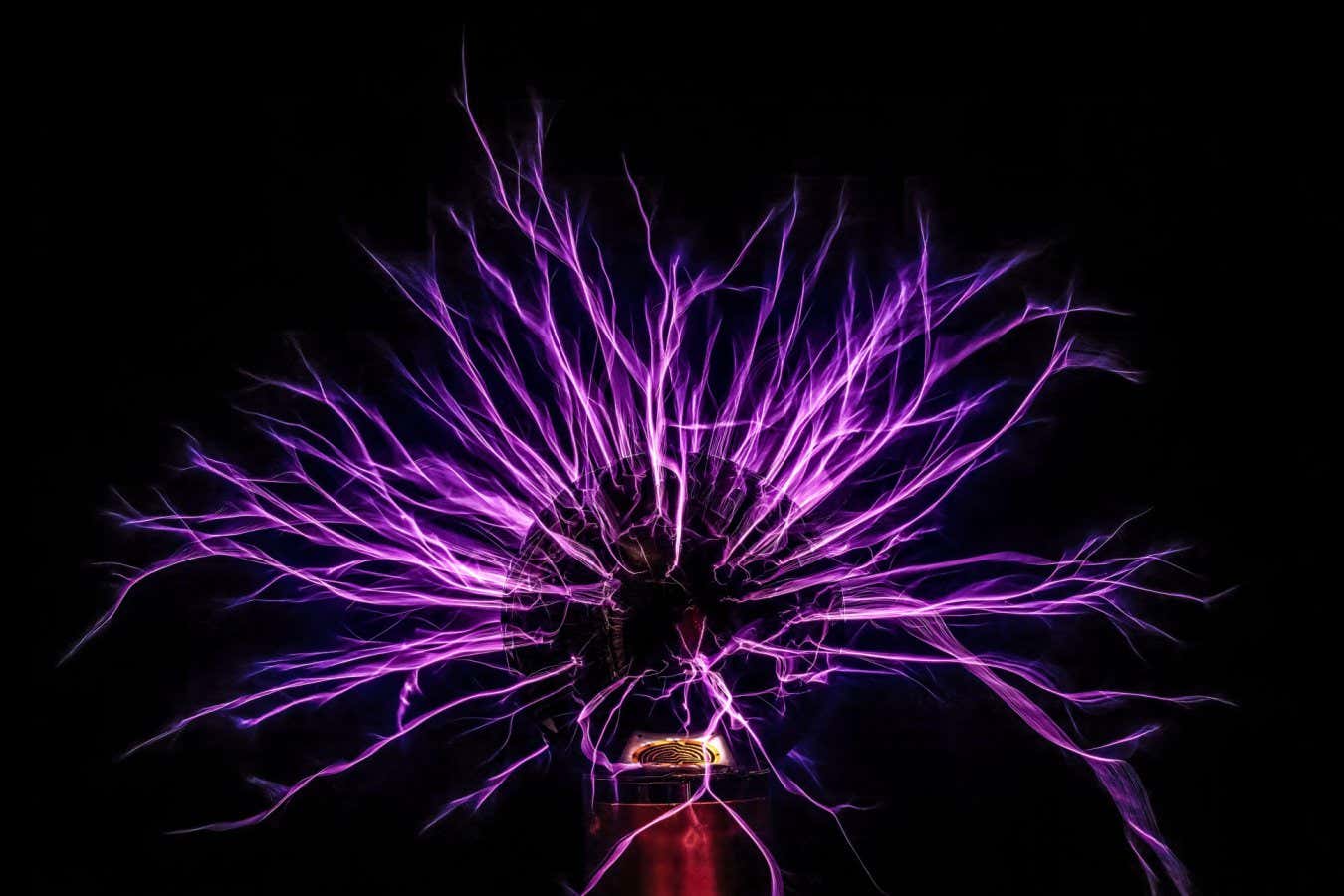
That's right: scientists detected Mars lightning by "hearing" it on a rover's microphone. You can even listen to it. It sounds a bit like someone tapping their microphone.
This is one of those cases where I'm a little confused why the paper is getting press now, since the result has been out for a while and was even covered in popular media already. New Scientist published a short news story on this work back in May, after the team presented the results at the Lunar and Planetary Science Conference. I know this because I wanted to write a story about it based on a presentation the team gave at another conference — but by then, this was old news!
Side-note: I'm honestly surprised that Perseverance even has a microphone; microphones are not common instruments on spacecraft. So that makes the sound all the more remarkable. And I sincerely hope that we'll start putting more microphones on spacecraft headed for destinations with atmospheres! Having a microphone on Titan or submerged in Europa's ocean would be incredible.
This post is more than 2 weeks old. To unlock the archive, support my work by becoming become a paid subscriber.