What do space sugars tell us about the origin of life?
The mystery of life's origin is not a missing magic ingredient, it's a missing process.

They're putting sugar in everything these days.
Two days ago, researchers announced that they'd found "bio-essential sugars" in samples returned from the near-Earth asteroid Bennu. Specifically, they identified sickly-sweet glucose and ribose, a carbohydrate ring that links up to form the backbone of RNA — DNA's single-stranded cousin and the prima donna of perhaps the most popular origin of life hypothesis.
Previously, researchers had found amino acids and nucleobases — the building blocks of proteins and nucleic acids like DNA and RNA — in samples of Bennu and another asteroid, Ryugu. So the discovery of sugars, which are present at much lower abundances than amino acids and nucleobases, rounds out a prebiotic trifecta. Researchers are often pretty shy about making strong claims about the astrobiological significance of their findings and leave the hype to the press release. But this paper just comes right out and says it:
"These sugars complete the inventory of ingredients crucial to life... this indicates that material with all three components necessary to life could have been dispersed to prebiotic Earth and other inner planets."
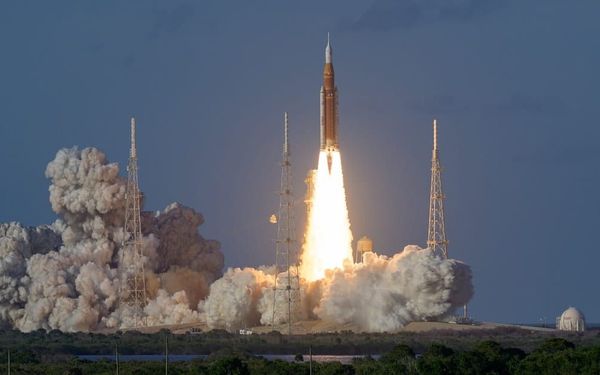
The discovery of sugars (and weird, sticky polymer rich in nitrogen and oxygen that's being called "space gum) in Bennu is rightfully being celebrated as a major achievement. For starters, the fact that we have this sample at all is incredible. OSIRIS-REx — NASA's most tortured acronym and its very first asteroid sample return mission — flew for several years to reach Bennu. There, it pulled off a soft landing on the asteroid's surprisingly squishy surface, scooped up a half-cup of the universe's most expensive dirt,[1] and then flew home to drop a sample capsule on Earth before jetting off for a new mission. I will never not be proud of our species for doing this kind of crazy thing. Go team human.
But.
This post is more than 2 weeks old. To unlock the archive, support my work by becoming become a paid subscriber.