Paper Roundup September 2025: Mars life, exploding black holes, quantum computing
Papers tackling the biggest questions in science, curated by hand each month.

Every month, I publish a curated list of the most fascinating, groundbreaking inflammatory, or otherwise bold new scholarship on the "big questions" of science. Inclusion is not endorsement. Think something should be included in next month's paper roundup? Shoot me an email at elise@reviewertoo.com.
If you liked this newsletter, why not share it with a friend or post it on Bluesky or wherever else you hang out online? That's the best way to help this project continue!
Don't miss next month's newsletter!
Highlights
Best evidence yet for ancient life on Mars
Redox-driven mineral and organic associations in Jezero Crater, Mars (Nature, September 10) by Joel A. Hurowitz, M. M. Tice, A. C. Allwood, M. L. Cable, K. P. Hand, A. E. Murphy, K. Uckert, J. F. Bell III, T. Bosak, A. P. Broz, E. Clavé, A. Cousin, S. Davidoff, E. Dehouck, K. A. Farley, S. Gupta, S.-E. Hamran, K. Hickman-Lewis, J. R. Johnson, A. J. Jones, M. W. M. Jones, P. S. Jørgensen, L. C. Kah, H. Kalucha, T. V. Kizovski, D. A. Klevang, Y. Liu, F. M. McCubbin, E. L. Moreland, G. Paar, D. A. Paige, A. C. Pascuzzo, M. S. Rice, M. E. Schmidt, K. L. Siebach, S. Siljeström, J. I. Simon, K. M. Stack, A. Steele, N. J. Tosca, A. H. Treiman, S. J. VanBommel, L. A. Wade, B. P. Weiss, R. C. Wiens, K. H. Williford, R. Barnes, P. A. Barr, A. Bechtold, P. Beck, K. Benzerara, S. Bernard, O. Beyssac, R. Bhartia, A. J. Brown, G. Caravaca, E. L. Cardarelli, E. A. Cloutis, A. G. Fairén, D. T. Flannery, T. Fornaro, T. Fouchet, B. Garczynski, F. Goméz, E. M. Hausrath, C. M. Heirwegh, C. D. K. Herd, J. E. Huggett, J. L. Jørgensen, S. W. Lee, A. Y. Li, J. N. Maki, L. Mandon, N. Mangold, J. A. Manrique, J. Martínez-Frías, J. I. Núñez, L. P. O'Neil, B. J. Orenstein, N. Phelan, C. Quantin-Nataf, P. Russell, M. D. Schulte, E. Scheller, S. Sharma, D. L. Shuster, A. Srivastava, B. V. Wogsland, and Z. U. Wolf
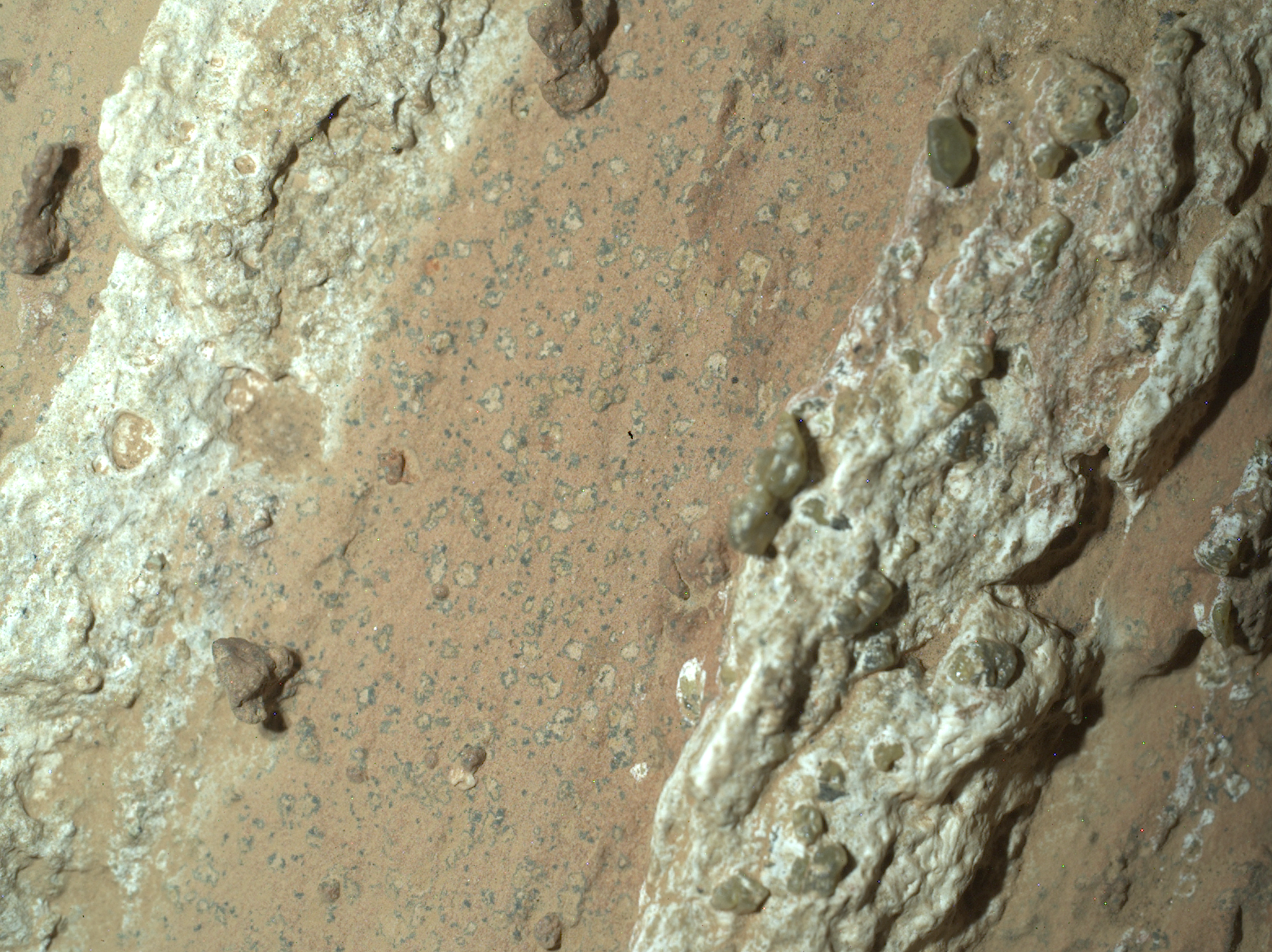
This month brought some of the most exciting astrobiology news in a while: NASA's Perseverance rover spotted mineral globules in a rock near Jezero Crater that might be the metabolic leftovers of ancient microbes. So, of course, I'm going to be a bit of a downer about it. While I think it probably is fair to call this the best evidence yet for life on Mars, that does not make it good evidence. Contrary to media claims, a similar rock would probably not be widely accepted as evidence for ancient life on our own planet — geochemical evidence alone usually doesn't fly in the "earliest evidence of life on Earth" game.
 Elise Cutts
This post is more than 2 weeks old. To unlock the archive, support my work by becoming become a paid subscriber.