Why does complexity science like ants so much?
Ants are basically the unofficial mascot of complexity science. Why?

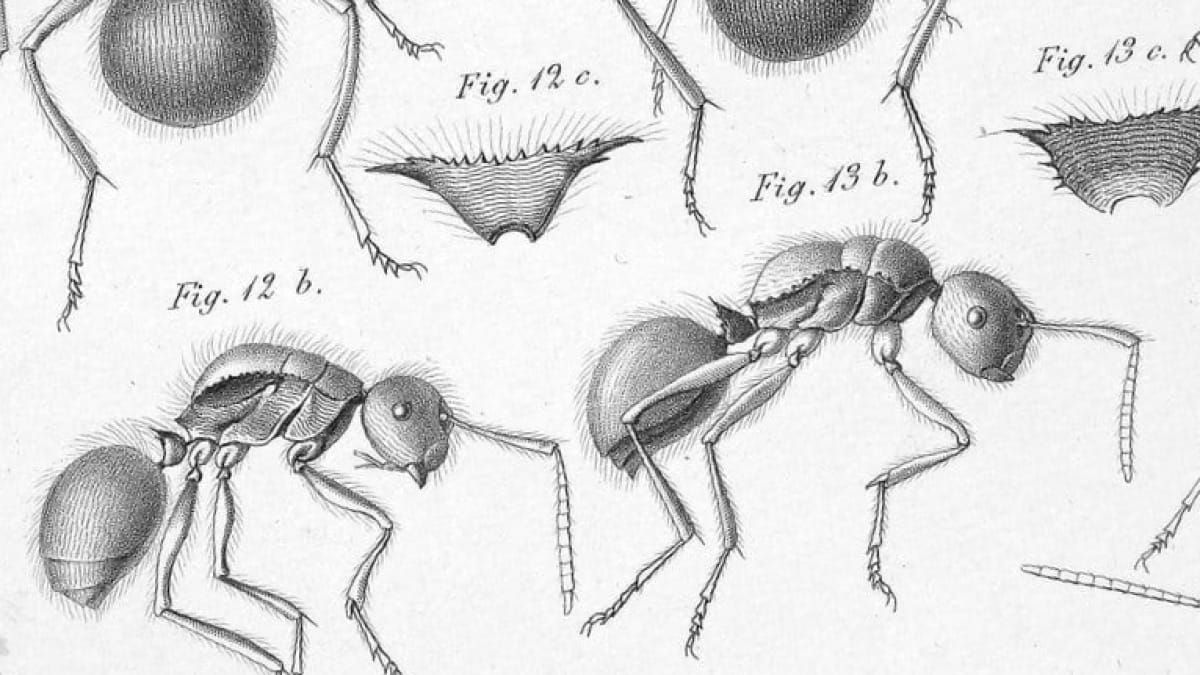
Open a book about complexity science, and you'll find ants.
Ants crawl over the cover of James Ladyman and Karoline Wiesner's 2020 book What is a Complex System? Steven Johnson's Emergence carries the subtitle "The Connected Lives of Ants, Brains, Cities, and Software" and gives ants their own chapter. The index of Geoffrey West's Scale lists entries for ants and ant colonies on 5 pages, scattered from the introduction to the conclusion. Ricard Solé's somewhat technical 2011 book on phase transition devotes two pages to ants. Neil These's less technical, more woo-woo Notes on Complexity has even more ants: they appear on pages 43, 34, 35, 30, 31, 24–28, 110, and 110 as examples of everything from complex systems as a whole to feedback loops, local interactions and... materialism? Melanie Mitchell's Complexity: A Guided Tour mentions ant colonies on 14 pages. One of complexity's holy texts, Douglas Hofstadter's weird and wonderful Gödel, Escher, Bach, expounds on ant bridges, ant colonies, ant castes, ant colony brains, ant intelligence, ant order and chaos, ant teams, and ant communism. Ants even get their own Ant Fugue occupying 25 pages.
This post is more than 2 weeks old. To unlock the archive, support my work by becoming become a paid subscriber.