Political (neural) networking
Eddie Lee mapped the political landscape underpinning the increasingly polarized US Senate using the same physics that sparked the AI boom

The study of complex systems owes a lot to the humble magnet.
A magnet’s magic emerges from the collective coordination of countless “spins,” units of intrinsic rotation that make certain atoms, like iron, act like tiny bar magnets. Like their macroscopic counterparts, these spins like to align: put mismatched spins next to each other, and they’ll flip-flop until they point the same way unless random thermal jitters knock them askew.
In the 1920s, physicist Ernst Ising captured this push and pull in a simple schema that would go on to become physics' go-to mathematical lasso for wrangling collective phenomena. And decades later, in 1982, condensed matter physicist John Hopfield realized that it might do much more. The way spins influence each other, he realized, looked a lot like how neurons exchange signals. By tweaking the Ising model, Hopfield built a simplified neural network that could “remember” and "recall" patterns. Geoffrey Hinton and others expanded on these ideas to spark the deep learning revolution that ushered in modern AI.
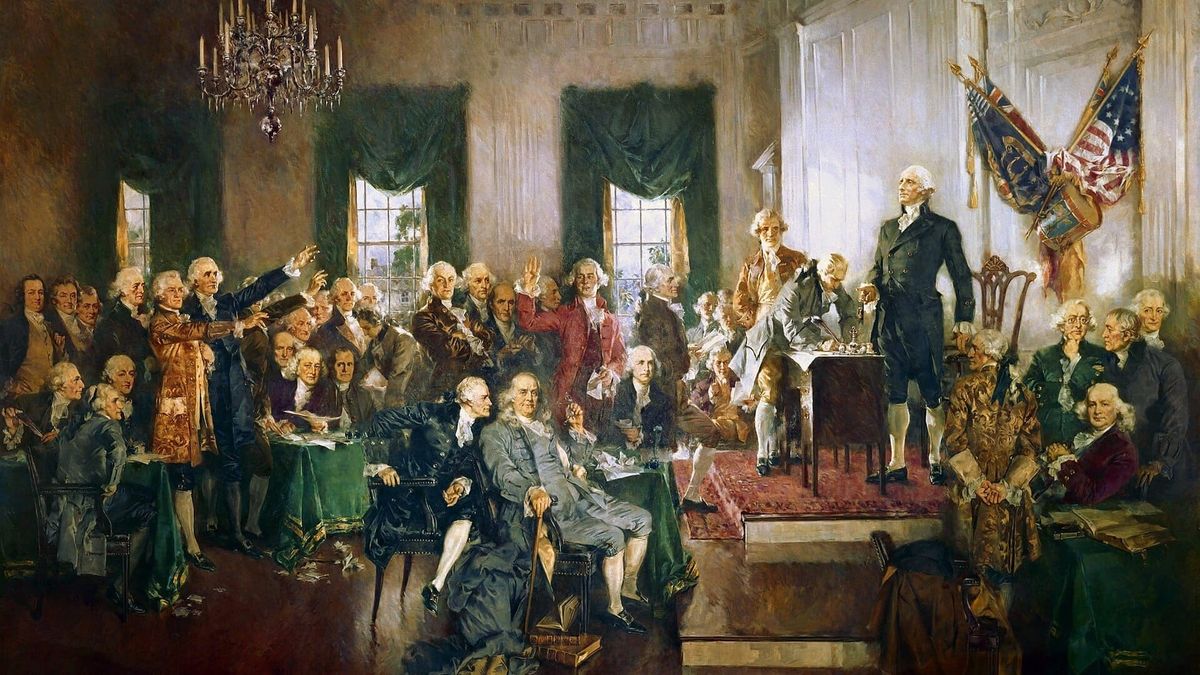
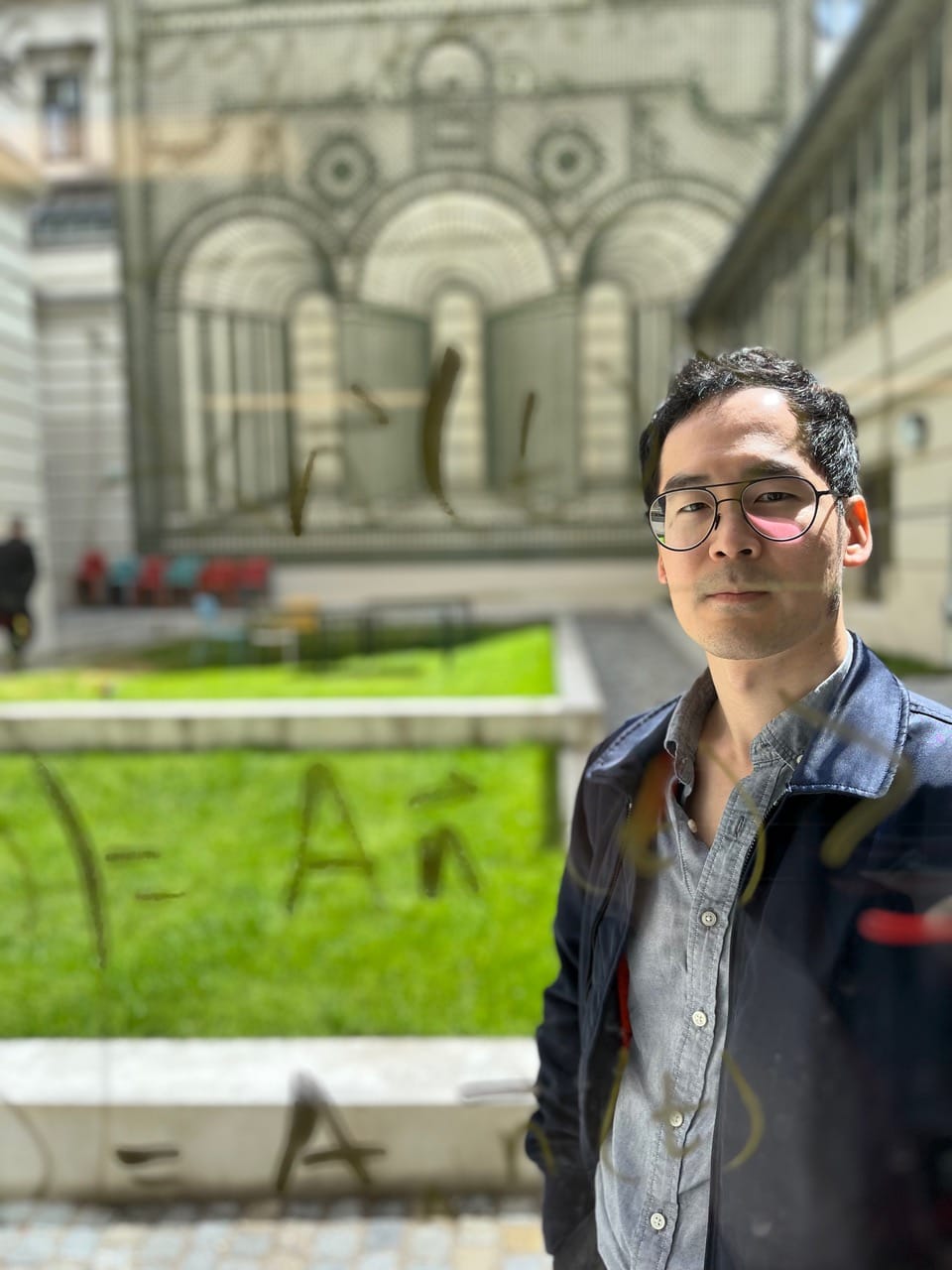
Magnets, physics, AI — this all might sound rather far away from the messy, human world of politics. But Eddie Lee, a physicist at the Complexity Science Hub in Vienna, recently discovered an unexpected connection between voting in the US Senate and the bare-bones neural networks that won Hopfield and Hinton the Nobel Prize in physics last year.
Eddie uses statistical physics to study how information flows through life and society. That could mean anything from understanding aggression in monkey troupes to decision-making on the US Supreme Court. And in a recent preprint with co-author Gavin Rees, he turned his physics toolkit on the US Senate to develop a mathematical representation of how individual inclinations manifest in votes. Much to Eddie's surprise, the simple model he devised to capture this straightforward intuition about votes reflecting personal preferences ended up recreating a simple neural network that Hinton used decades ago to unleash the power of deep learning: the restricted Boltzmann machine.
Boltzmann machines were among the first neural networks designed to dream up new data rather than simply remember it — an early form of generative AI. They typically have two layers of nodes: a visible layer that takes inputs and gives outputs, and a hidden layer that represents patterns internally. By adjusting how strongly different nodes interact with each other, the network can absorb statistical patterns that appear over and over again in their inputs and output similar patterns. Restricted Boltzmann machines are leaner versions that cut down on internal chatter: visible nodes connect only to hidden ones, not to each other. These trim networks played a vital role in the 1990s AI renaissance after Hinton and colleagues showed that stacks of them could be used to "pretrain" deep neural networks and dramatically boost their performance.
This post is more than 2 weeks old. To unlock the archive, support my work by becoming become a paid subscriber.