The asteroid Ryugu contains every letter of the genetic alphabet
This is awesome, but does not mean life fell to Earth from space

If you only want to get the main newsletter posts, you can unsubscribe from TLDRs from your subscriber portal.
Have your own suggestions or requests? Fill out my survey.
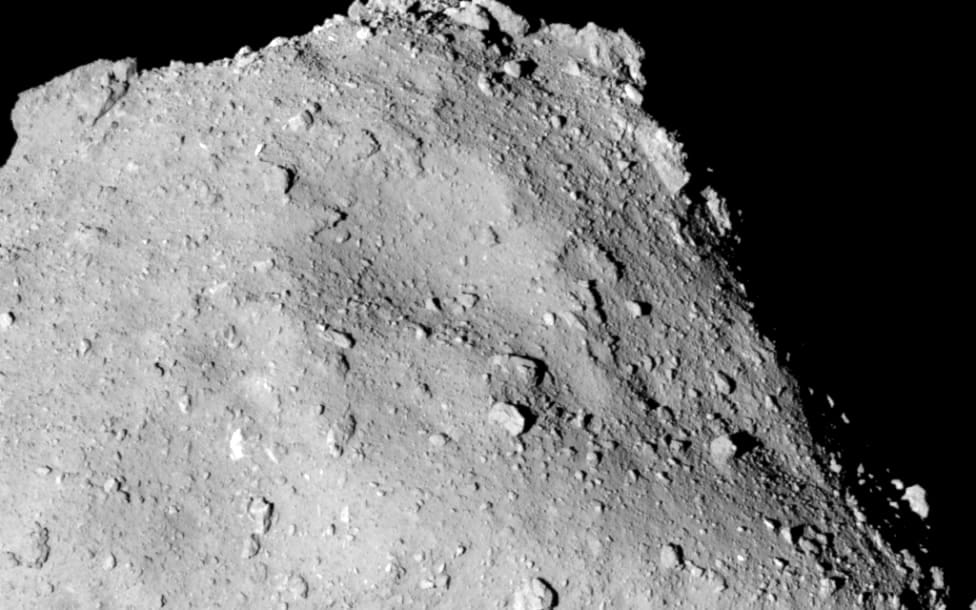
Once again, asteroid samples are in the headlines: this Monday, researchers announced that they'd found all five letters of the genetic alphabet in rock dust returned from the asteroid Ryugu.
Whenever research like this hits headlines, the headlines are invariably... fun. My favorite this time is India Today's "All 5 chemicals that make up life found in a space rock for the first time."

Ah yes, all five chemicals that make up life. All five of them.
New Scientist (a magazine I write for, because I am indeed stupid enough to throw stones from a glass house) went with an even bolder headline:
Reading things like this, you could be forgiven for thinking asteroids are basically ready-made life construction kits. But what should we really make of this new discovery? What does it tell us that we didn't know before — and what does it mean for the origin of life?
What's new
DNA and its cousin RNA consist of chains of simple molecules called nucleobases strung together along sugary chains. The nucleobases are like the letters of the genetic alphabet, and life uses just five of them: adenine, thymine, cytosine, guanine, and uracil.
The new study reports all five of these genetic "letters" in rock dust that the Hayabusa2 probe scooped up from Ryugu — an ancient asteroid that's about as old as the Solar System itself.

Who did it
The analysis was performed by a team of Japanese researchers, most of them at the Japan Agency for Marine-Earth Science and Technology.
How they did it
Analyzing Ryugu samples is tricky business because there simply isn't a lot to work with: Hayabusa2 returned just a few grams of rock from Ryugu.
For this study, researchers treated 11.9 milligrams of Ryugu dust — a thousandth of a teaspoon — to extract molecules that dissolve in water, including nucleobases. They then ran these molecules through instruments that separate out molecules by mass, which allowed them to identify nucleobases along with several other molecules including amino acids (simple components of proteins).
Watch the Hayabusa2 probe touch down on asteroid Ryugu
Why it matters
I hope, maybe, finally, this study will convince the public that maybe we can stop being surprised about finding simple organic molecules in space.
Long before we had asteroid samples, resesearchers documented a zoo of organic molecules in meteorites — including nucleobases. And more recently, samples returned from the asteroid Bennu confirmed a similar diversity in fresh material from space (including sugars, which made headlines last year). But previously, scientists had only found one "letter," uracil, in Ryugu samples. But now we know that Ryugu, too, contains an alphabet soup of genetic building blocks.
This is, to me, not very surprising. Scientists find organic molecules in space basically everywhere they look. But nucleobases in Ryugu is the kind of not-very-surprising thing you need to actually confirm, because convincing ourselves that the basic building blocks of life form easily in dead rocks tells us a few important things about the origin of life: 1) just getting a bunch of organic molecules together does not lead to life, and 2) the secret "ingredient" for life is going to be a particular environment with particular processes, not some special molecular building block.
 Elise Cutts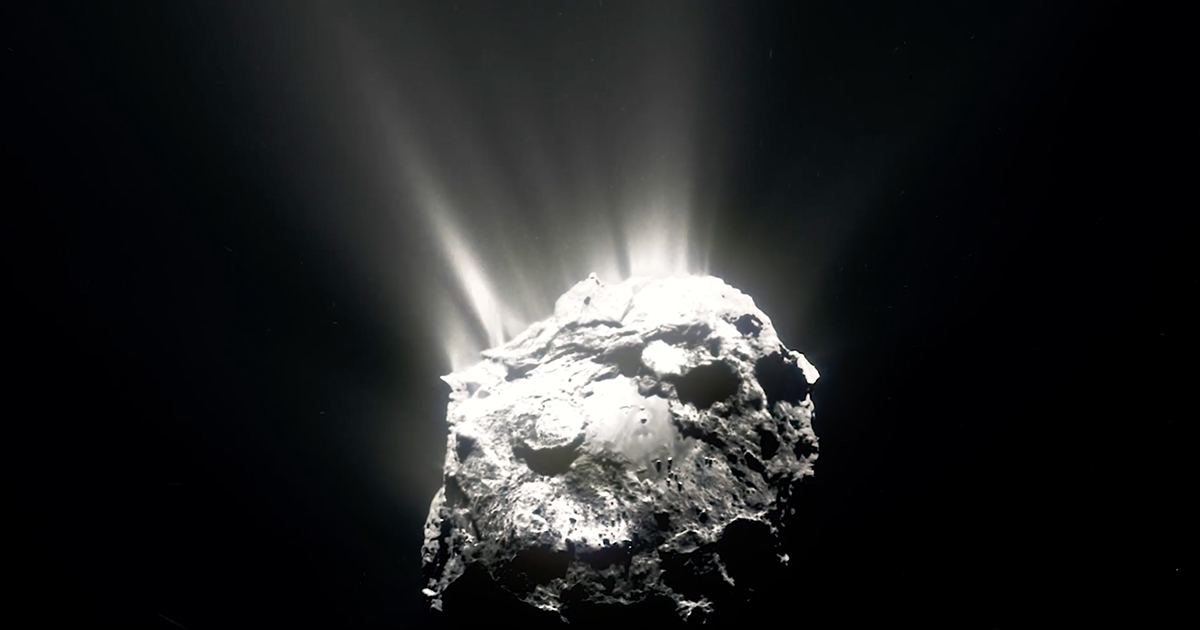
I do want to note that, for scientists, this study goes further than mere detection. Comparing the amounts of different organic molecules in Ryugu, Bennu, and meteorites can give researchers hints about the kinds of geologic processes that happened early in the solar system — that's important and interesting.
But please. Can we maybe move on from declaring "maybe life fell from space" every time one of these studies comes out? There are so many more interesting questions to ask about organic molecules in space, how they form, and what they have to do with life on Earth.

Look. You and I both know that if I were a barista, you'd 100% be leaving a tip right now. The social pressure to drop a coin in that jar would just be overwhelming. But you're presumably reading this thing alone on a universe-rectangle, so I can't rely on my mere presence to remind you to be nice.
If you made it this far I assume you're enjoying the article. So maybe drop a coin in my digital tip jar. It's just €2 per month (€0.25 per post!) — a cheap and fully automated weekly warm fuzzy feeling for the digital age.
Yes, you're right: this post should have come out yesterday. I was sick last week and it threw off my post schedule — and my brain. When I sat down to write this morning I was absolutely confident that today was Tuesday when it is, in fact, Wednesday. It happens.
Thanks for reading
There are many ways you can help:
- Subscribe, if you haven't already!
- Share this post on Bluesky, Twitter/X, LinkedIn, Facebook, or wherever else you hang out online.
- Become a patron for the price of 1 cappuccino per month
- Drop a few bucks in my tip jar
- Send recommendations for research to feature in my monthly paper roundups to elise@reviewertoo.com with the subject line "Paper Roundup Recommendation"
- Tell me about your research for a Q&A post (email enquiries to elise@reviewertoo.com)
- Follow me on Bluesky
- Spread the word!