What do space sugars tell us about the origin of life?
The mystery of life's origin is not a missing magic ingredient, it's a missing process.


They're putting sugar in everything these days.
Two days ago, researchers announced that they'd found "bio-essential sugars" in samples returned from the near-Earth asteroid Bennu. Specifically, they identified sickly-sweet glucose and ribose, a carbohydrate ring that links up to form the backbone of RNA — DNA's single-stranded cousin and the prima donna of perhaps the most popular origin of life hypothesis.
Previously, researchers had found amino acids and nucleobases — the building blocks of proteins and nucleic acids like DNA and RNA — in samples of Bennu and another asteroid, Ryugu. So the discovery of sugars, which are present at much lower abundances than amino acids and nucleobases, rounds out a prebiotic trifecta. Researchers are often pretty shy about making strong claims about the astrobiological significance of their findings and leave the hype to the press release. But this paper just comes right out and says it:
"These sugars complete the inventory of ingredients crucial to life... this indicates that material with all three components necessary to life could have been dispersed to prebiotic Earth and other inner planets."
The discovery of sugars (and weird, sticky polymer rich in nitrogen and oxygen that's being called "space gum) in Bennu is rightfully being celebrated as a major achievement. For starters, the fact that we have this sample at all is incredible. OSIRIS-REx — NASA's most tortured acronym and its very first asteroid sample return mission — flew for several years to reach Bennu. There, it pulled off a soft landing on the asteroid's surprisingly squishy surface, scooped up a half-cup of the universe's most expensive dirt,[1] and then flew home to drop a sample capsule on Earth before jetting off for a new mission. I will never not be proud of our species for doing this kind of crazy thing. Go team human.
But.
While I'm very excited about this new chapter in the emerging story of organic molecules as ubiquitous and important players on the cosmic stage, I really don't think the researchers are right to present Bennu as some kind of fully stocked biological pantry. And I honestly am surprised it got through peer review with this framing. Claims about biosignatures are obviously not equivalent to claims about simple molecules involved in the origin of life, but a recent paper describing a possible biosignature on Mars got skewered in peer review for language I'd consider a tad more cautious than this.
 Elise Cutts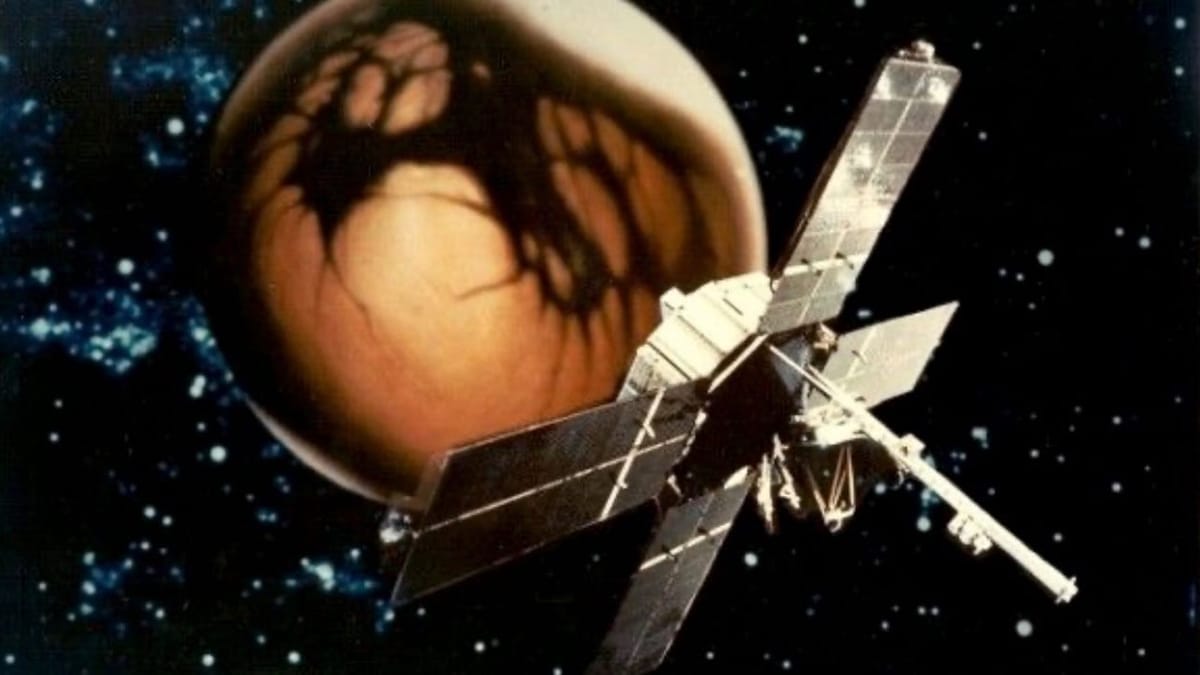
My post on the Mars biosignature claim
Grab your umbrellas, because as you may have guessed given my track record of lovingly-Grinchy astrobiology commentary, I am indeed going to rain a on this parade.
There's a superficial, nitpicky problem with the claim that Bennu contains "all three component necessary to life" and there's a deeper problem that I think is actually worth talking about.
To get the superficial out of the way: what about lipids?
Lipids are fatty molecules that make up the membranes that separate every single living cell on this planet from its environment. No lipids, no cells, no life. These molecules stand alongside carbohydrates (chains of sugars), proteins (chains of amino acids) and nucleic acids (chains of nucleobases linked to sugar backbones) among the key "building blocks" of life. And fatty acids, the simplest lipids, haven't been found in Bennu as best I've been able to tell.
To be fair: it is not surprising that the research team didn't identify lipids in this particular study. Scanning through their methods, it looks like they were specifically targeting sugars and their acid extraction method wouldn't be the way to go if you were looking for fatty molecules like lipids. But it is weird to me that the team would announce they'd found all of the essential ingredient for life with just 3 members of the 4-piece major biomolecule set in hand.
I almost hate even pointing this out. It is so "um... actually" that I worry I somehow missed an important memo a while back about how the origin of life field has decided all you need for life is sugar, amino acids, and nucleobases. But assuming no memo was missed, I think this is a bit more than a nitpick. Scholars have a responsibility to think about how their work will be cited — and the overconfident claims in this paper, to me, seem highly likely to spawn zombie factoids. There's now a reputable paper in a reputable journal claiming in very clear language that sugars, amino acids, and nucleobases are "all three components necessary to life." People will cite that. It will become a fact, even though it is not a fact but rather a subjective reflection of this particular research team's particular understanding of what life is and what's needed for it to emerge.
However, let's set all that aside and assume that Bennu does contain lipids — or that lipids are actually not necessary for the origin of life. It doesn't matter. Take your pick, but let's assume Bennu actually contained every agreed-upon "building block of life." What would that actually tell us about the origin of life?
The study authors, NASA press release people, and several journalists who picked up the story seem to think it tells us quite a lot. Bennu is very old, and fragments of asteroids like it are found throughout the solar system. So, the study concludes, "all three crucial building blocks of life would have reached the prebiotic Earth and other potentially habitable planets." The implication is that the raw ingredients for the origin of life were delivered from space and, taking a step further, that we should be a bit more hopeful about finding life elsewhere in the Solar System.
As best I can tell, I think these claims ultimately boil down to RNA. Because nucleobases were previously found in Bennu, finding sugars too means the simplest components of RNA molecules are all present in the sample.
RNA has long preoccupied the origin of life research community because it can do two jobs: it can carry genetic information just like DNA, and it can catalyze biochemical reactions like a protein. Ribosomes, the cellular machines that turn messages from the genome into proteins, are made mostly of RNA. And those messages are, themselves, carried by short strips of messenger RNA. The RNA world hypothesis, proposed in the 1960s and elaborated substantially in the 2nd half of the 20th century, posits that the very first living things (or things on their way to being alive) were strips of self-replicating RNA. The study team seems to have picked up this equivalence of RNA and life, which would explain why they didn't include lipids in their trinity of bio-essential molecules.
The RNA world isn't the end of the origin of life story, obviously. There's quite a lot separating a handful of random RNA building blocks from self-replicating, possibly even living entities on their way to being cells. But there's a kind of assumption — which is made explicit several times in this paper — that if you could just get the right building blocks together, life is kind of inevitable. The RNA world tends to (but doesn't have to) go hand in hand with variations on "primordial soup" scenarios in which a broth of simple building blocks of life like nucleosides, amino acids, and sugars react randomly until something capable of self-replication pops out. It's a bit of an infinite monkeys typing forever until they get the complete works of Shakespeare situation — except the monkeys are't infinite, and we don't really know what they need to manage to type.[2]
If that sounds vague, you are correct. And that's because we still don't know how something alive assembled from something dead. That's the true mystery of the origin of life: not a missing magic ingredient, but a missing process. It's emergence.
Sourcing the building blocks is not the central problem, here. Simple organic molecules are simply not that hard to make. Zapping the right combo of simple gasses with electricity produces lots of them. They can form at deep-sea vents. And basically every time we look for them in space, we find them — and in ever-increasing diversity and complexity. I wrote about this for Quanta last year. It's truly remarkable how much we're learning about the organic cosmos and what getting a better handle on how these molecules form could teach us about the evolution of planetary systems (yes, including worlds potentially capable of giving rise to life).
 Elise Cutts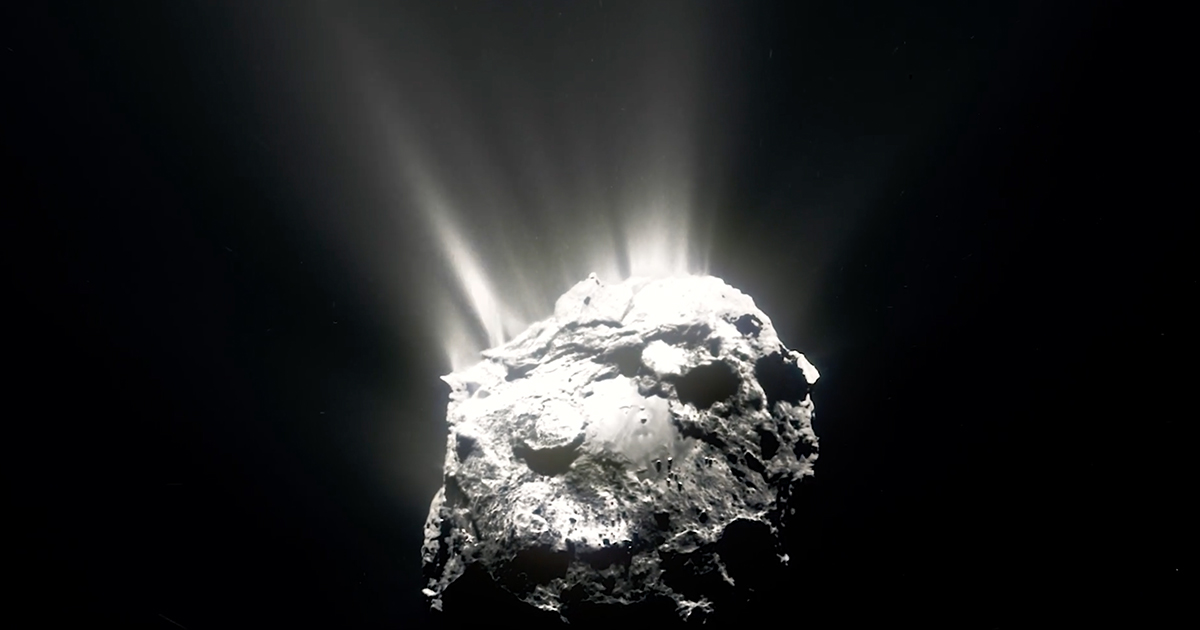
Basically, pick your favorite origin of life scenario and you can probably find a way to get some simple organic molecules in place at the start. Space is not the only option, even if it is an interesting one. If there had been something suspiciously life-like about space organics, like the preference for "left-handed" proteins and "right-handed" nucleic acids universal to life on Earth, then their mere existence would be a good hint that life got its first building blocks from space. But that isn't the case — nothing we know about space organics explains anything about life thus far. So I think it's a bit misleading to imply that there's necessarily some deep connection between organic molecules and biology. The Bennu space sugars are the building blocks of a space rock, not of life.
This is the point at which I will admit that I think we should retire the building blocks of life metaphor altogether.[3] A building block implies a building. If you find a LEGO brick laying around, you can be pretty sure it is the building block of a LEGO construction, or was at least intended to be. LEGOs are not ubiquitous components of the natural world. They exist to build LEGO constructions, their mere existence implies a specific purpose in a specific context.
Simple organic molecules like sugars, amino acids, nucleobases, and fatty acids are not LEGOs. They are ubiquitous elements of the nonliving world, not unique products of biology. To imply otherwise — as we often do implicitly when we describe space organics as the "building blocks of life" — suggests that there's something inherently vital about these molecules. It leaves the impression that the emergence of life is just a matter of getting the right ingredients together.
If the same logic worked in the kitchen, cookie recipes could be a lot shorter. I've got a good one: butter, sugar, flour.
Footnotes
[1]: OSIRIS Rex cost about $1.16 billion to build, launch, and operate and brought back about 121 grams of Bennu dirt, for a per-gram price tag of $9.6 million.
[2]: A semi-relevant side-rant I realized was more a frustration with the fixation on tiny concentrations of organics in space rocks and less support for my main point: To make a soup scenario work, you need some way to stock your broth with amino acids, sugars, and the like. Space has been a popular place to look for ingredients for several decades; meteorites are full of organic molecules, and now we are finding them in samples returned directly from ancient asteroids like Bennu, which is older than the Earth. To be honest, I've never really grasped how this idea gets around the dilution problem. Dropping a few asteroids, even if they were solid sugar cubes, into the global ocean of the early Earth does would be a proverbial drop in the bucket. Sure, there'd be the occasional sugar drifting out there. But unless it bumps into other organic molecules, it's not going to do anything interesting. Somehow, you have to concentrate all the good stuff somewhere. Otherwise your primordial soup will just be seawater. Extraterrestrial delivery of organic molecules is a popular theme in the origin of life world, though, so I assume I'm missing something here.
[3]: The building block metaphor makes a bit more sense to me if you want to talk about specific monomers in polymers, like amino acids as the building blocks of protein. But I'm personally trying to use this metaphor only in purely biological contexts (i.e., contexts in which the amino acids in question were produced by something alive, with the purpose of assembling into protein), or with careful elaboration of context otherwise.
Thanks for reading
There are many ways you can help:
- Subscribe, if you haven't already!
- Share this post on Bluesky, Twitter/X, LinkedIn, Facebook, or wherever else you hang out online.
- Become a patron for the price of 1 cappuccino per month
- Drop a few bucks in my tip jar
- Send recommendations for research to feature in my monthly paper roundups to elise@reviewertoo.com with the subject line "Paper Roundup Recommendation"
- Tell me about your research for a Q&A post (email enquiries to elise@reviewertoo.com)
- Follow me on Bluesky
- Spread the word!