Stingers and spikes across nature have the same shape. Here's why.
Not everything in biology evolved for a purpose.

If you only want to get the main newsletter posts, you can unsubscribe from TLDRs from your subscriber portal.
Have your own suggestions or requests? Fill out my survey.
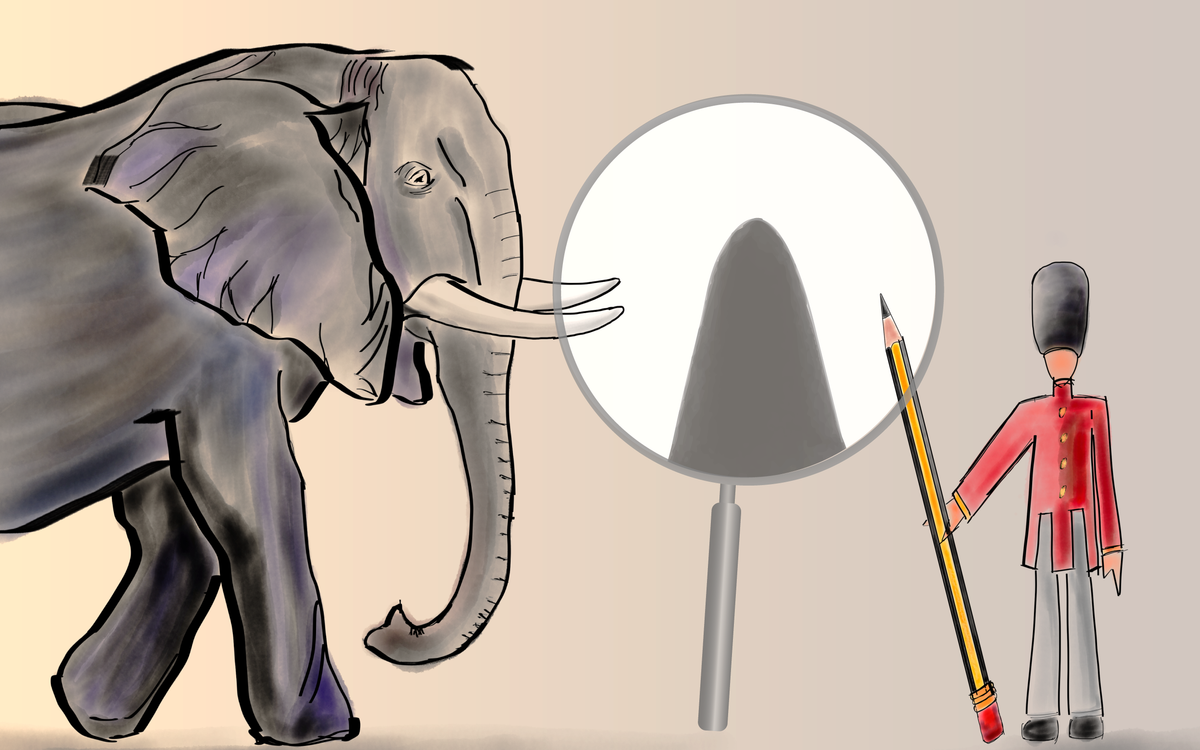
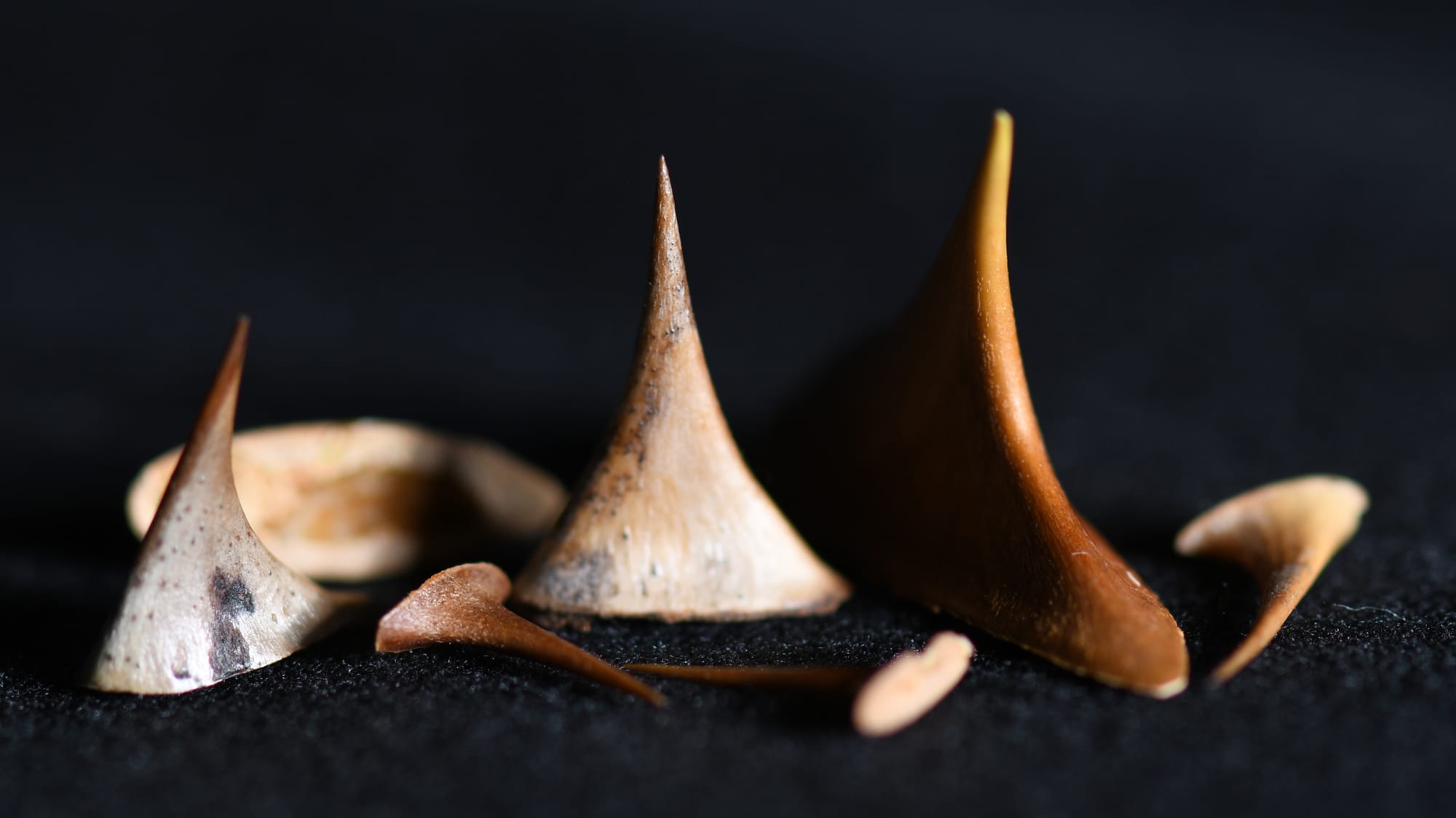
From cacti to bees to narwhals, nature abounds in stabby spikes. Sharp horns and stingers make great weapons, while spines and spikes provide protection. And having spear tips in your mouth comes in pretty handy if you're a meat-eater without hands.
Despite their stunning diversity in purpose, shape, and size, stingers and spikes follow a surprising pattern: across the tree of life, they taper to a blunt tip with the same geometry.[1] It's the universal curve of natural stabbing weapons, as it were.
And in research published last week in the Proceedings of the National Academy of Sciences, researchers used math and a lot of sacrificial pencil nubs to show where that curve comes from.
What's new
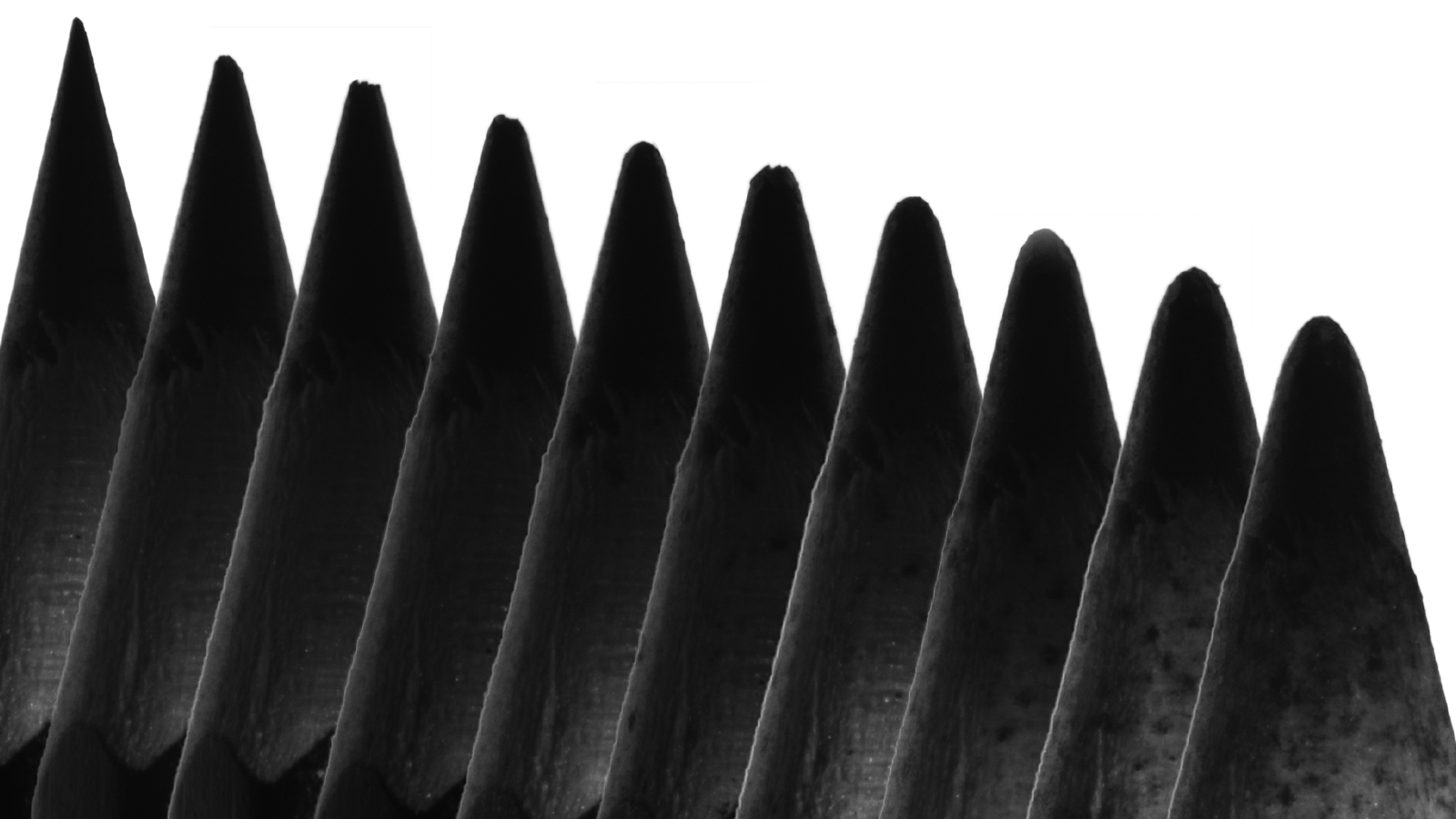
The team found that the universal curve of natural spines and spikes can emerge as the natural result of random collisions between a pointy object and its environment. They showed this both mathematically and experimentally by shaking a bunch of sharpened pencil nubs (and fake pencil nubs made of bull's horn) on shake tables for hours and seeing how their points eroded down to the universal curve.
Who did it
The study comes from a duo out of the Technical University of Denmark: PhD student John Sebastian, who describes himself as a physicist and engineer, and his supervisor, soft matter biophysicist Kaare H. Jensen.
How they did it
This is where the study gets fun.
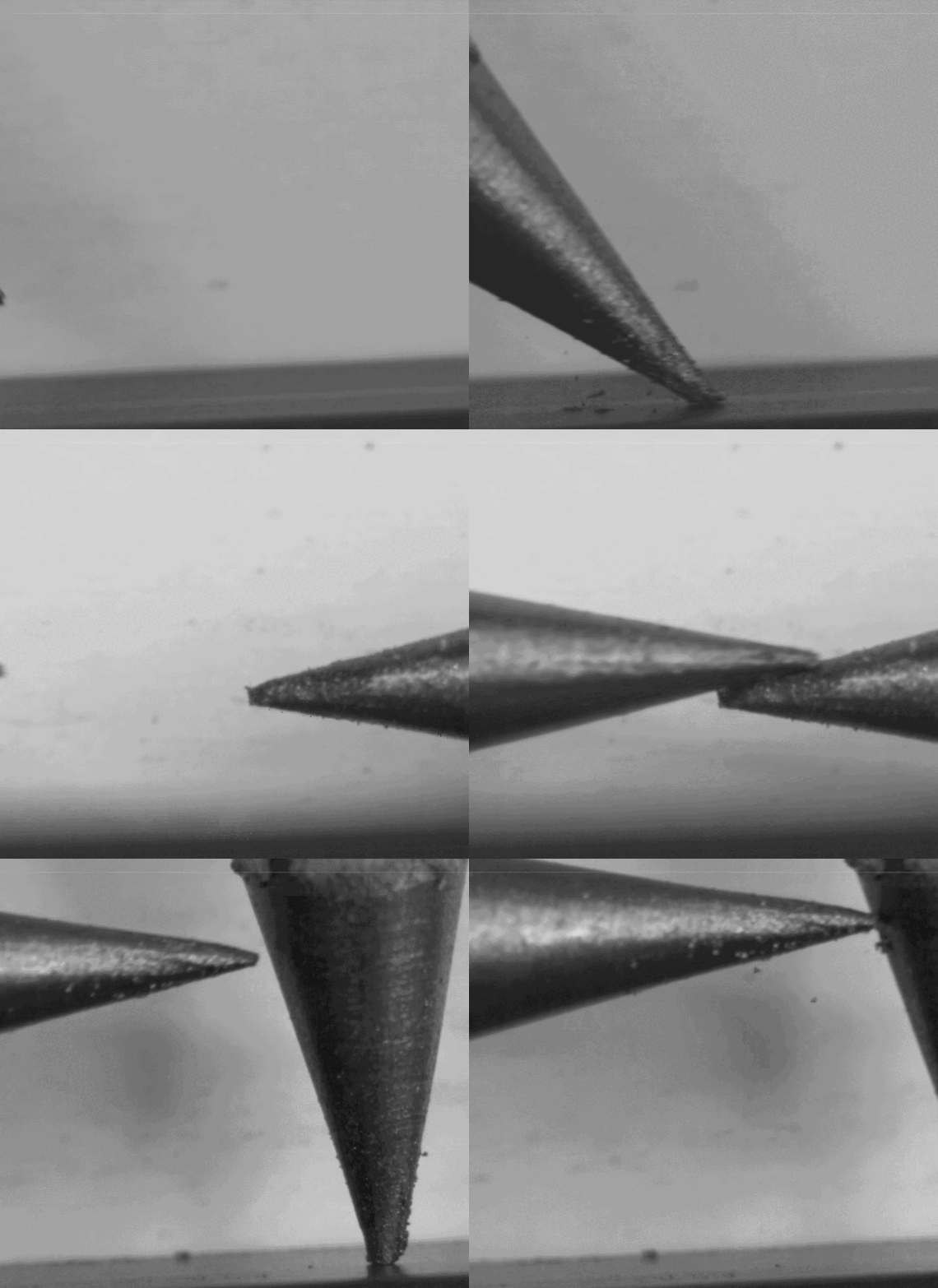
To prove their point, the team sharpened 2B and 7B pencil nubs (excuse me: "biomimetic stingers") on a shaker plate and jiggled them around for 256 minutes. They did a few experiments, including taking high-speed footage of pencil-on-pencil violence, to determine how exactly the pencils collided and blunted. They also tested pencils with different starting tip shapes — flattened and chopped-off — to show that you end up with the same curve no matter how you start.
Sebastian and Jensen also ordered disks of natural bull's horn and machined them down into pencil-shaped nubs to confirm that their shake table setup produces the same shape in a tougher, natural material (albeit with much more shaking).
The researchers thought the explanation had to do with the geometry and physics of mechanical wear: colliding with stuff in the environment tends to shave away more material from sharply curved parts of a "stinger" than flatter ones. By devising a simple set of equations, they were able to calculate that this simple mechanism could end up producing the shapes seen in nature and in their experiments.

Look. You and I both know that if I were a barista, you'd 100% be leaving a tip right now. The social pressure to drop a coin in that jar would just be overwhelming. But you're presumably reading this thing alone on a universe-rectangle, so I can't rely on my mere presence to remind you to be nice.
If you made it this far I assume you're enjoying the article. So maybe drop a coin in my digital tip jar. It's just €2 per month (€0.50 per post!) — a cheap and fully automated weekly warm fuzzy feeling for the digital age.
Why it matters
In 2024, biologists realized that stingers and stinger-like stabbies taper to a universal curve across scales in life. And as biologists often do, they assumed this evolved for a reason — that the universal curve was optimal for stabbing without buckling. But the same geometry shows up in pointy things in the nonliving world, from stalagmites to dissolving popsicles. Fresh, young biological spikes end in sharp points, not the blunt universal curve. Organisms also sometimes discard worn-down points for sharper ones, as sharks do for their teeth. Would that make sense if the universal curve was somehow the best for stabbing?
This study offers a cohesive explanation for the shapes seen across nature: a simple weathering process, not evolutionary fine-tuning.
What I think about it
Personally, I think it's important to we keep in mind that not everything life does is adaptive or purposeful. Evolution is not an engineer, and not every trait has some evolved purpose. Sometimes, organisms are the way they are just because of random chance — or, as in this case, because they are physical objects in the physical world, subject to physical forces just like everything else.
Also: to the tiny spikes of microscopic sea algae, a narwhal's tusk is about as long as the radius of the Solar System is compared to the radius of the Earth. And yet across that enormous range in scale, pointy things look the same. I mean, come on. That's just amazingly cool.
Footnotes
[1]: It is a paraboloid that reflects a power-law relationship between radius and distance from the tip with n~2, for the nerds among you.
Thanks for reading
There are many ways you can help:
- Subscribe, if you haven't already!
- Share this post on Bluesky, Twitter/X, LinkedIn, Facebook, or wherever else you hang out online.
- Become a patron for the price of 1 cappuccino per month
- Drop a few bucks in my tip jar
- Send recommendations for research to feature in my monthly paper roundups to elise@reviewertoo.com with the subject line "Paper Roundup Recommendation"
- Tell me about your research for a Q&A post (email enquiries to elise@reviewertoo.com)
- Follow me on Bluesky
- Spread the word!