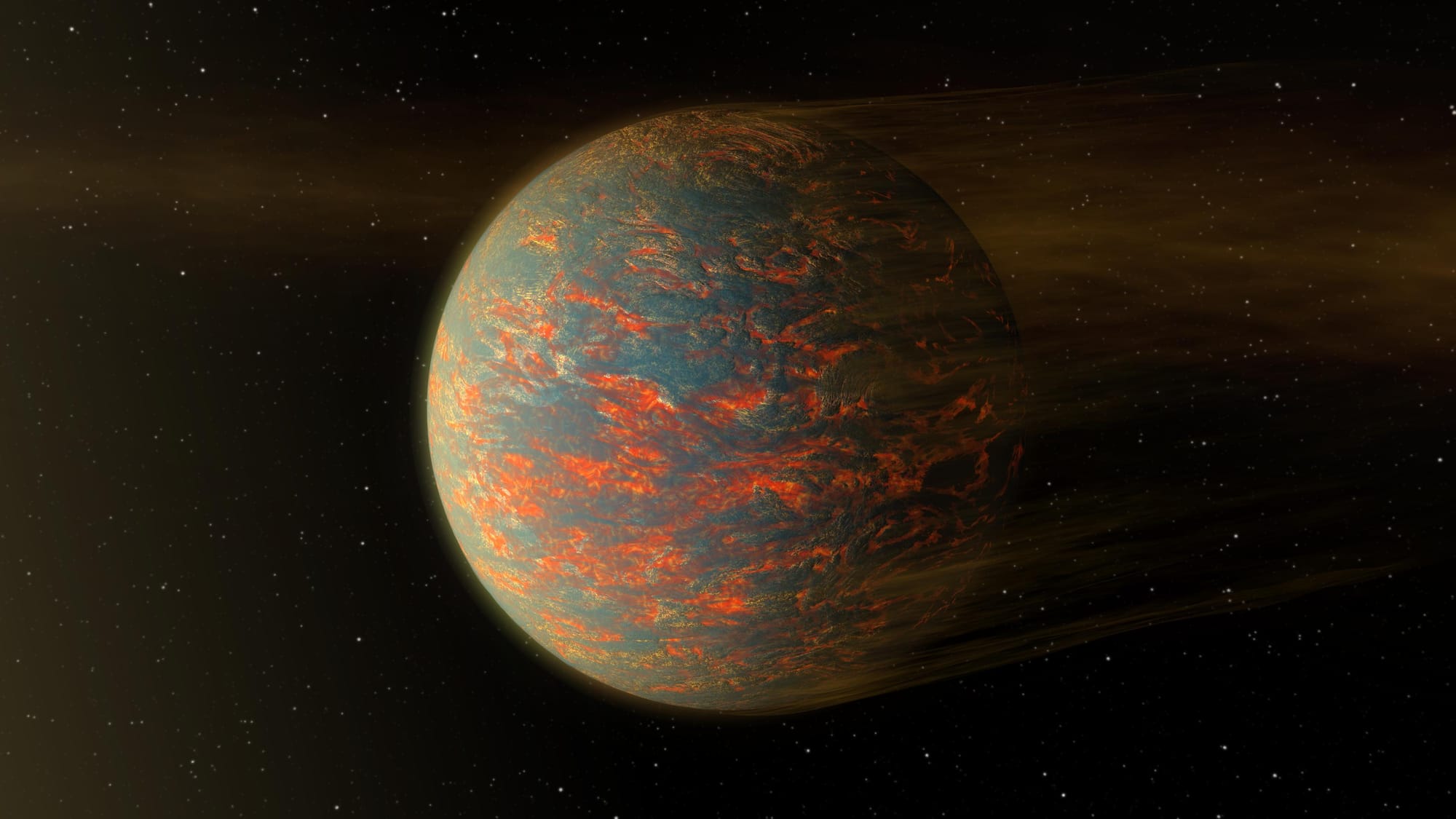
Hot rocks are what's cool in rocky exoplanet research
Habitable zone? Pfft. For exciting planetary science discoveries, keep your eye on lava worlds and hot rocks.


I'm writing this quick note from my hotel room in Groningen, the Netherlands, where I've spent the last week chitchatting with planetary scientists about rocky planets at the 4th Rocky Worlds conference.
It's been great. If there is such a thing as "frontier science," rocky exoplanet research is it. This field is almost ridiculously young. The very first rocky exoplanet was confirmed just 15 years ago. And when the conference series started in 2020 — right before JWST launched — it was basically all modeling. We were starting to detect rocky planets, but not much more. That all changed with JWST. Observations started rolling in. First there were tentative detections of atmospheres. Now scientists are pushing further, making tentative detections of molecules in atmospheres.
It's not just the science itself that's young. Most of the Rocky Worlds attendees are PhD students and postdocs, and even the professors are young: PIs are mostly Gen X or elder millennials, and that includes the people leading some of the world's best and biggest groups in exoplanet astronomy. It's rare that you end up seeing so many leading scientists and so few gray hairs at once.
Anyways, the field moves fast. And being here was a great way to see the frontier it's moving into right now. And no, it is not habitable worlds. We're not even at a point where we can get yes/no answers about habitable-zone rocky planets having atmospheres or not. That might be possible within the next decade, but there are significant challenges to overcome and it isn't on the immediate horizon.
Right now, hot rocks are what's cool... or hot? Lava worlds, in particular, are worth keeping your eye on if you want to follow the most exciting new research on rocky worlds over the next few years. Here's why.