A bad month for space whales
Two new papers on Europa and Titan complicate the case for habitable oceans on the icy moons. They're still our best bet for finding aliens.

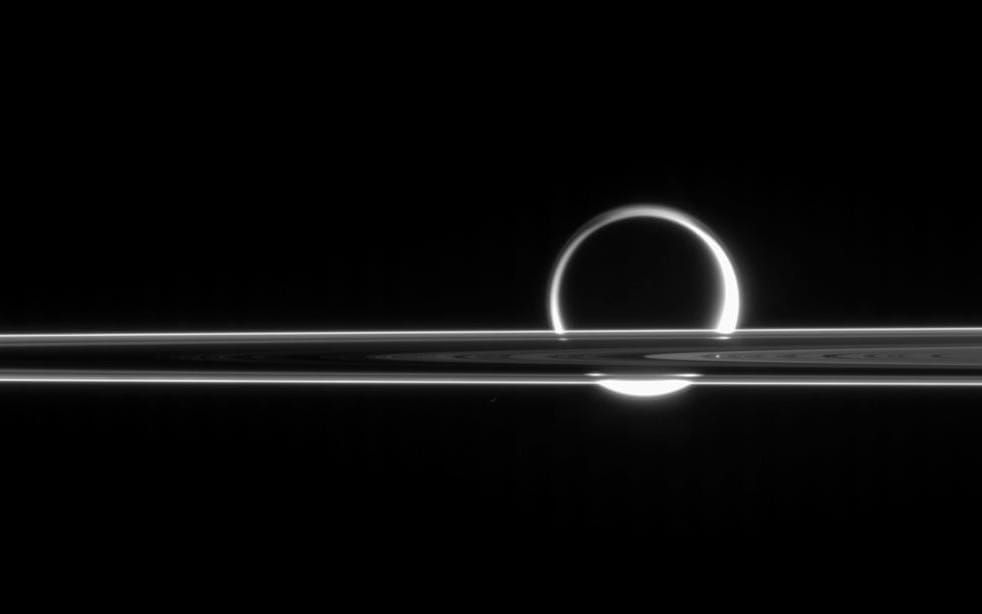
Beneath the icy crust of Jupiter's moon Europa lies a ocean of liquid water. This dark alien sea is thought to be between 60 and 150 kilometers deep — up to 10 times deeper than even the deepest ocean trenches on Earth — and contains more liquid water than all of Earth's oceans combined.
Compared to Mars — a toxic, dusty, irradiated ball of dry dirt with almost no atmosphere to speak of — and Venus, which somehow manages to be even more hellish, an enormous ocean wrapped up in a protective icy shell sounds pretty hospitable. It's hard not to leap into flights of fancy: forests of weird, bioluminescent Europan kelp swaying on the currents, alien squids, space whales, it's all just too fun to imagine. But there's an element of fact to this fantasy, at least in that astrobiologists genuinely consider Europa and the other icy moons of Jupiter and Saturn to be among most promising places to look for life in our solar system.
So it's a bit concerning that two papers came out this past month that complicate hopes for subsurface ocean biospheres on the icy moons we're about to visit and study in the greatest detail — Europa and Saturn's moon Titan. Europa's ocean could be tectonically and geochemically dead, which would mean there'd be little energy available for a potential biosphere. And Titan might not have a liquid water ocean at all.
This post is more than 2 weeks old. To unlock the archive, support my work by becoming become a paid subscriber.