Maybe don't call exoplanets "Earth-like" until the 2040s
A plea and a note on science communication

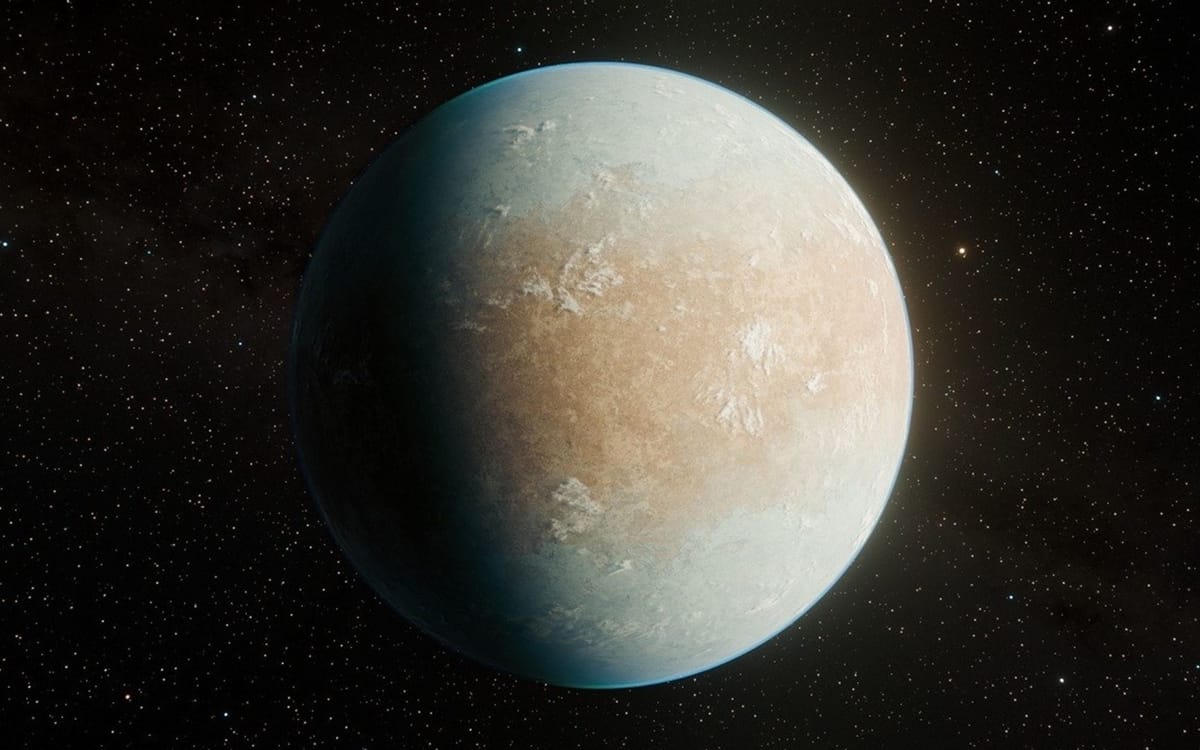
Just this week, researchers announced the discovery of a new planet with some exciting properties: It's almost exactly the same size as the Earth, its year is almost exactly one Earth-year long, and there's a good chance it orbits in the habitable zone. Not only that, its star is not a weird, feisty, atmosphere-shredding M-dwarf like TRAPPIST-1 but a well-tempered orange dwarf that could be our Sun's cousin.
Would you say this world is Earth-like?
I had to ask myself exactly that question this week when I wrote this news story announcing the discovery of exactly that planet. It's real, and it is called HD 137010 b. Look it up, and these are the top Google news results:
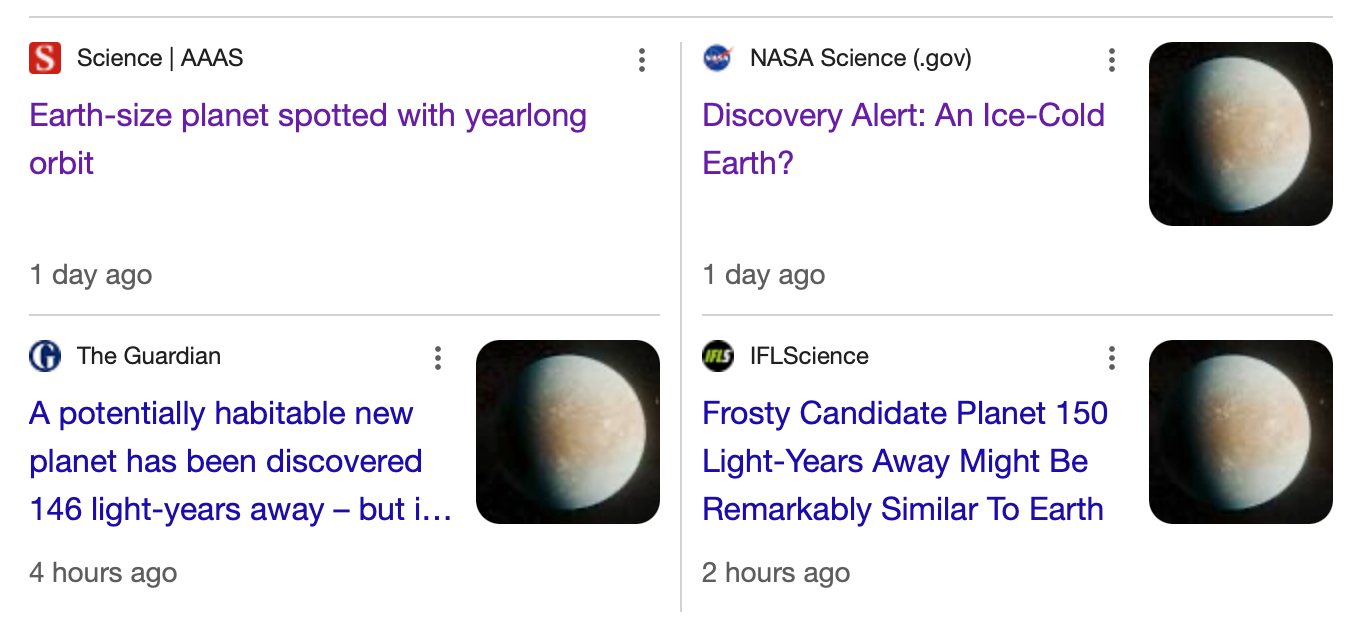
Can you tell which one is mine? It is, indeed, the boring one from Science. You caught me. I'm even more cautious than the NASA press release. (Note: we used the same image, but Science's article thumbnails don't seem to be loading properly)
This planet got dubbed a "cold Earth" because it is Earth-sized, orbits a star that's maybe Sun-like if you squint (it is 1000 degrees Celsius cooler) and receives less solar radiation than Mars. And read more widely in the exoplanet world, and you'll see a lot about "super-Earths" and "hot Earths" and "Earth Twins" and "Earth-like planets" around "Sun-like stars." But do we actually know enough about these worlds to justify comparing them to our own?
I'd argue we don't. Earth-like evokes way more than a mass, radius, and position in the habitable zone around a particular kind of star.
I'm guessing that most lay consumers of science communication on exoplanets probably have no clue that the lovely planet pictures that run with these stories are artists' concepts — let alone that we won't even have the needed technology to start characterizing the atmospheres of Earth-sized planets in the habitable zones of stars like ours until the 2040s. "Earth-like" sounds like air and continents and oceans and maybe life. It does not sound like 2-3 basic physical measurements. It's misleading, and will stay that way for decades.
I was lucky enough to chat with UC Riverside planetary astrophysicist Stephen Kane about HD 137010 b, and he made this point more clearly than I could:
"Clearly by saying 'Earth-like properties around a Sun-like star,' they're trying to draw the analogy to our own planet. However, we don't know any of its properties other than its than its size," he said. And we already know of another planet that's almost exactly the same size as the Earth: Venus. "So if all you know is the size, then you found a Venus. Why not say Venus-like?"