Paper Roundup 3.2.2026
A human-curated research roundup published each Tuesday

Each Tuesday, I send out a human-curated list of research papers that aer interesting, inflammatory, or just plain fun that came out in the past week (or took until last week to pop up in my alerts and RSS feeds). Free subscribers get my top 3 highlights, paid subscribers get the whole list. Sign up to keep tabs on the frontiers of science!
- Noncanonical genetic markers resolve the pre-GOE emergence of aerobic bacteria in Earth’s history by Tianhua Liao et al. (Proceedings of the National Academy of Sciences, January 20, 2026)
One of life's first, most dramatic terraforming efforts was the complete reworking of Earth's atmosphere: some 2.4-2.1 billion years ago, the sky turned blue. The blue wasn't the point, it was just a side effect of the oxygen pouring into the air, which ate away the rust-red hazes of methane that had previously clouded the sky. Green microbes called cyanobacteria had figured out how to turn sunshine, carbon dioxide, and water into sugar and oxygen — and in doing so, they'd remade the world and set the stage for the evolution of complex life like us, which needs to breathe oxygen to meet its energy demands.
But how long did it take after cyanobacteria evolved their oxygen-producing version of photosynthesis before the atmosphere filled with oxygen and the skies turned blue? This study developed a machine learning model to analyze the genomes of over 80,000 different kinds of bacteria to pin down the evolution of air-breathing metabolism to about 2.7 million years ago. That's several hundred million years before the "Great Oxidation Event" that saw Earth's atmospheric oxygen climb from basically nothing to about 10% of modern day levels.
As a former geobiologist, I just had to highlight this one — I remember talking about whether or not there was a delay between the evolution of oxygenic photosynthesis and the Great Oxidation Event in college!
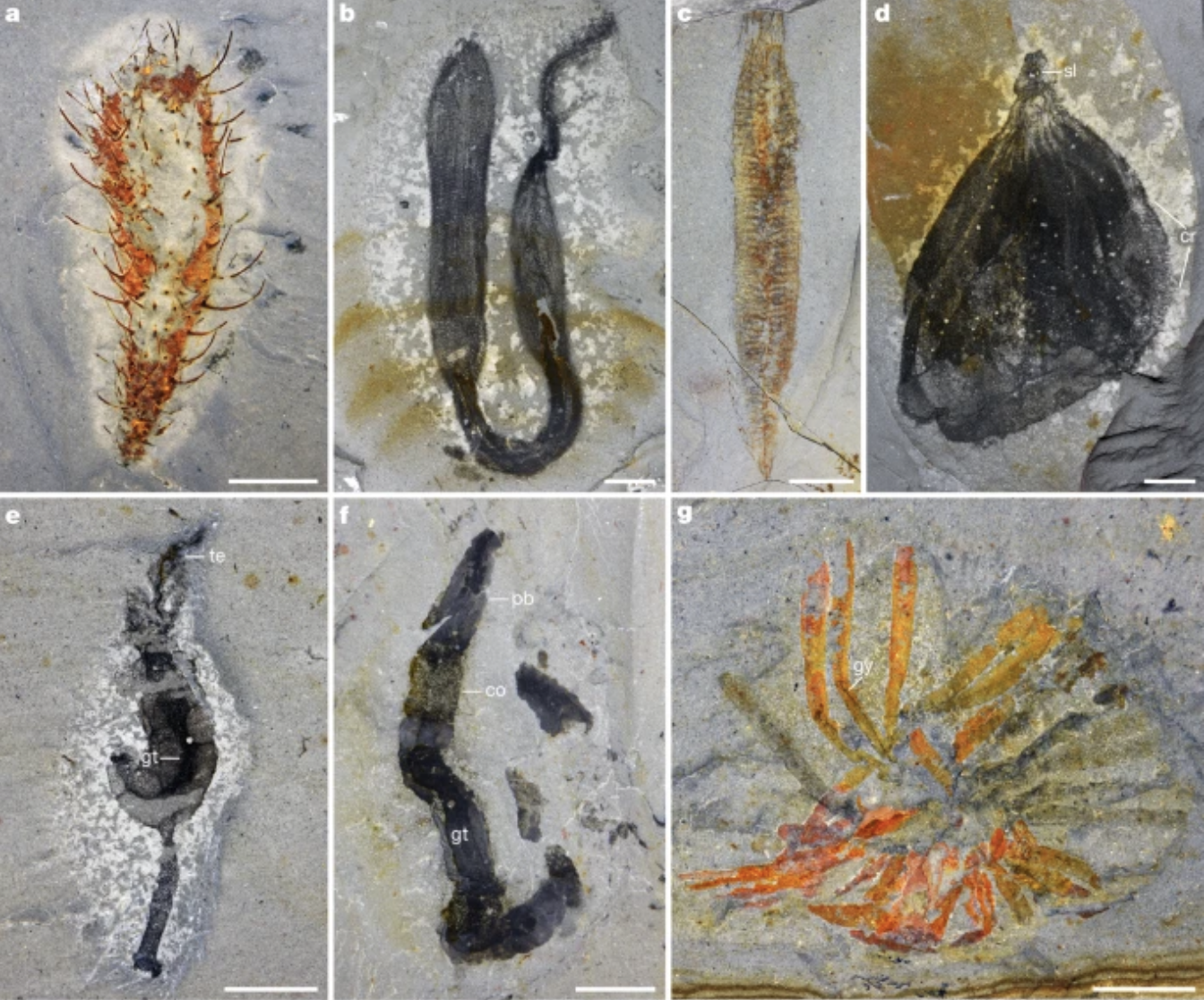
- A Cambrian soft-bodied biota after the first Phanerozoic mass extinction by Han Zeng et al. (Nature, January 28, 2026)
More geobiology — sorry, not sorry. Researchers in China unearthed yet another truly jaw-dropping assemblage of Cambrian animal fossils. The newly announced Huayuan biota comprises 153 animal species, among which just under two thirds are entirely new species. Remarkably, most of the fossil animals in this 512 million-year-old treasure trove are soft-bodied creatures. That's rare, because soft body parts — anything that' snot the skeleton, basically — tend to rot away before they can fosilize. But there are even some fossils here whose cell-level tissue is preserved.
- Geomagnetic Constraints on Millicharged Dark Matter by Ariel Arza et al. (Physical Review Letters, January 27, 2026)
And to round out this week's Earth science-focused highlights: this paper is about using the Earth's magnetic field as a dark matter sensor. Need I say more? I need not. But if you want more, check out this plain-language summary in Physics.
Last week also saw new papers on sleep deprivation, the structure of the early Universe, why hard stuff is rewarding, and more: