Paper Roundup 27.1.2026
A human-curated research roundup published each Tuesday

Each Tuesday, I send out a human-curated list of research papers that aer interesting, inflammatory, or just plain fun that came out in the past week (or took until last week to pop up in my alerts and RSS feeds). Free subscribers get my top 3 highlights, paid subscribers get the whole list. Sign up to keep tabs on the frontiers of science!
- Four camera-type eyes in the earliest vertebrates from the Cambrian Period by Xiangtong Lei et al. (Nature, January 21, 2026)
The earliest vertebrates had four eyes, not two. That's what a team of Chinese researchers reported last week in Nature based on an analysis of two myllokunmingids — the most ancient vertebrates known — from 518 million year-old shales unearthed in Chengjian, China. These shales date to the Cambrian explosion, a period of rapid evolutionary diversification in which the ancestors of modern animal lineages appeared in the fossil lineage for the first time. In some non-mammalian vertebrates, the evolutionary ghosts of these extra eyes persist as light-sensing and endocrine organs in the pineal complex.
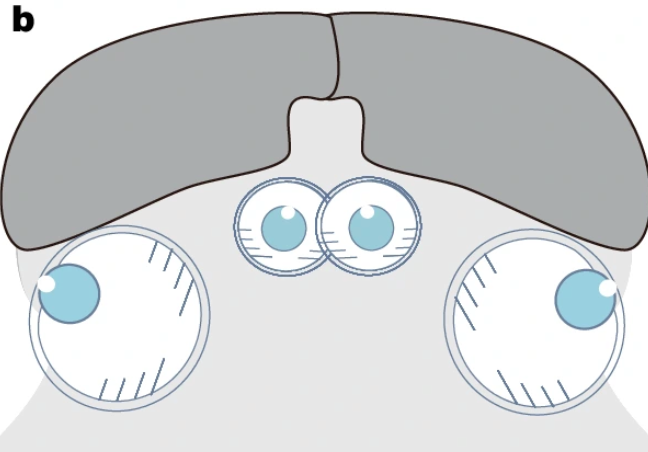
I couldn't help but chuckle a bit at this discovery, because it's the second time within a year that scientists have discovered something that props up the world-building of James Cameron's Avatar films. Pandora, the alien world of Avatar, is a habitable moon of a gas giant in orbit around Alpha Centauri inhabited by four-eyed animals. Last year, scientists spotted a gas giant orbiting in the habitable zone of Alpha Centauri. And now we have the four-eyed animals — which mostly lost their extra eyes, as happened on fictional Pandora in the humanoid lineage. Funny.
 Elise Cutts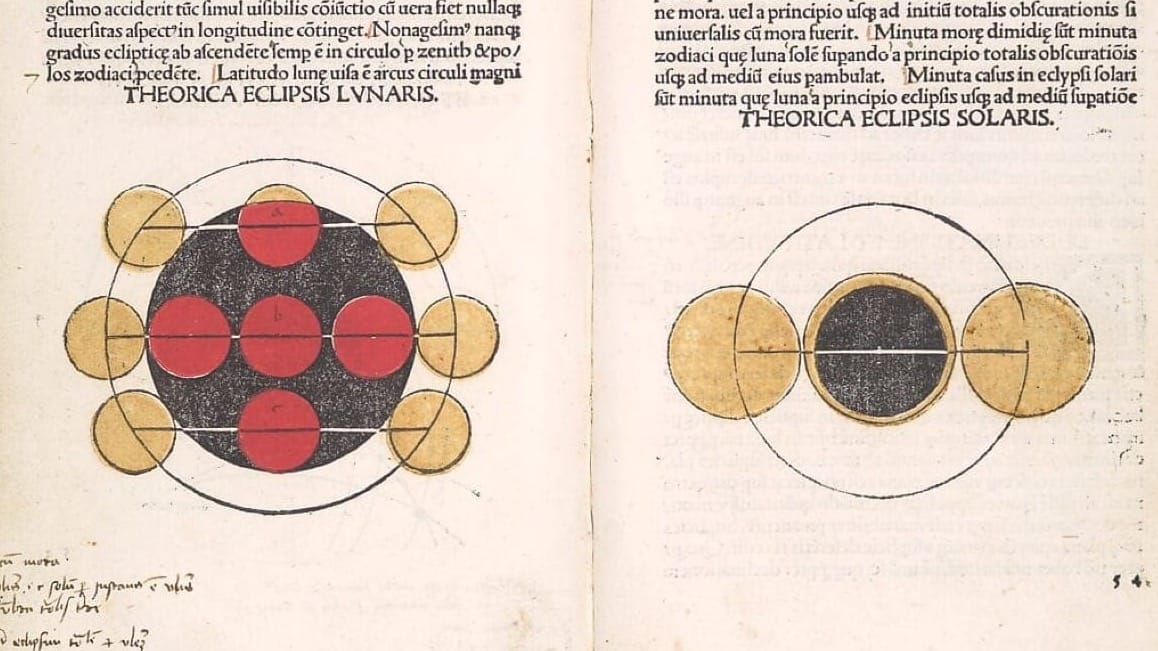
- The cerebellar components of the human language network by Colton Casto et al. (Neuron, January 22 2026)
Nestled up against the base your brain is another, smaller brain: the cerebellum. This structure, bizarrely, contains something like 80% of the neurons in the human brain despite accounting for only 10% of the brain's volum. And even more weird, it isn't exactly necessary; some rare people are born without entire chunks of the cerebellum — or no cerebellum at all — and they can survive and live relatively normal lives.
It used to be that researchers thought the cerebellum was basically just involved in motor control. But over the past few decades, they've established that it is involved in a whole lot more — including, as this study demonstrates, language. In a huge dataset of 846 people who sat for 1033 fMRI scans over 26 experiments, the research team pinned down regions in the right half of the cerebellum that respond to language and teased apart what exactly it is they do for language cognition. The team thinks that these regions in the cerebellum might both help predict upcoming language and to integrate incoming words into something like meaning.

- Probing quantum mechanics with nanoparticle matter-wave interferometry by Sebastian Pedalino et al. (Nature, January 21, 2026
Quantum particles famously act like both waves and particles, and can exist in states of superposition, which are like clouds of possibility that haven't yet collapsed to a single state or behavior yet. This behavior is usually confined to the smallest scales in space and time — at most, a few hundred atoms. But now, scientists in Vienna have coaxed a whopping 7,000 atoms into quantum superposition in what they (not the media! the scientists!) called the biggest yet "Schrödinger cat state". Together, they have a mass in the range of a protein. This was a highly controlled experiment, but I still wonder if it will mean anything for the quantum biology community, which is often met with a lot of (valid) skepticism over the idea that anything meaningfully quantum could persist at any meaningful scales of space and time within a cell.
The headlines for this one have been hilarious. Lots of "Schrödinger's cat got fat" and such. I recommend this story by Elizabeth Gibney in Nature if you're looking for a plain-language summary:
 Elizabeth Gibney
Last week also saw new papers on CRISPR-ing mitochondria, the oldest ever rock art, astronaut brains, and more: