Is your willpower stronger than a proton beam?
How much are researchers — especially marginalized researchers — expected to endure just to stay in science?


Also get in touch if you'd like to support more young science writers. I'd be very interested in developing a more formal "first clips" program with the right team and/or support.
You can support R2 — including helping me help more new writers — by signing up to leave a €0.25 tip for each post.
I have spent years in the lab perfecting my nitrile glove removal technique. Since starting as a PhD student in microbiology at MIT in 2024, I’ve watched enough safety videos depicting laboratory contamination disasters to ensure that I never, ever touch the outside of my gloves. Even when the only substance I come in contact with is harmless alcohol, I make sure to double-wash my hands and forearms before touching anything else. If someone told me that I would be guaranteed the Nobel Prize if I would just ease up on one minor safety measure — well, the prize would have to go to someone else.
It’s not just me who’s worried about safety. Today, the number of mandatory trainings and other institutional hurdles that fledgling researchers like me have to overcome just to handle a test tube can be frustrating. But for a hypochondriac like myself, these barriers are comforting. So it was quite chilling to read the story of Anatoli Bugorski for the first time.
Bugorski was a PhD student in Soviet Russia working with the U-70 synchrotron, the largest particle accelerator in the Soviet Union. One fateful day in July 1978, he leaned over to check a malfunctioning piece of equipment and was struck in the head by a proton beam. It passed through the back of his head, his brain, and his left middle ear before finally exiting through his left nostril. It’s thought he received 2000-3000 Sieverts of radiation — if you’re like me and have no idea what this number means, Bugorski clarifies by asserting that he saw a flash “brighter than a thousand suns.” Sounds fun! Bugorski was admitted to a hospital, where the left half of his face swelled up and the skin peeled, revealing that the beam had burned through parts of his face, bone, and brain tissue. Most doctors predicted that he wouldn’t make it, but miraculously, he survived.
And more remarkably, after eighteen months of treatment, Bugorski was back in the lab.
As harrowing as Bugorski’s tale is, it is unfortunately far from the only story of enormous sacrifice in the name of science. These days, improved safety protocols mean scientists aren’t usually putting their lives on the line for their lab, pacifying nitrile glove enthusiasts like myself. Yet, the sacrifice remains — just in a different flavor. Research culture still demands and glorifies sacrifice in all forms. Especially from marginalized people who already have to overcome systemic adversity before even entering the lab.
Today’s scientists are largely treated like cogs in the academic machine, only rewarded when articles are accepted to prestigious journals or when grant funding is awarded. The Trump administration’s attack on higher education, particularly academic research institutions, has only worsened this dynamic. Since taking office in 2025, the administration has halted or completely terminated research and global health grants, fired thousands of researchers and government employees, and threatened or frozen funding to universities in an anti-DEI effort to control hiring and admissions. For academia, which already suffers from a lack of diversity and representation, the heightened burden of shrinking research teams and uncertain funding is sure to make the “leaky pipeline” of academic research even leakier.
But in the face of these challenges, the solution is not to romanticize resilience. It is to challenge the expectation that scientists survive impossible conditions — we decided we weren’t going to tolerate more accidents like Bugorski’s, and lab safety improved. We shouldn’t tolerate scientific systems built on the sacrifices of marginalized people, either.
Would you die for science?
Bugorski is not the only researcher who literally put their life on the line for science. Marie Curie discovered two new elements, but later succumbed to a bone marrow disease likely caused by exposure to the very same radioactivity that she helped advance our understanding of. Rosalind Franklin’s undeniable contribution to resolving the helical structure of DNA, famously under-appreciated during her lifetime, exposed her to X-ray radiation that is suspected to have contributed to her death at the young age of 37. The dangers of radiation were at least moderately known by 1952, the year that Franklin’s student Raymond Gosling took the famous ‘Photograph 51’ that James Watson and Francis Crick used to unravel the structure of DNA. Three decades earlier, the harrowing story of the ‘Radium Girls’, the young women who ingested copious amounts of radium by licking the bristles of brushes dipped in radium paint, had been widely circulated. Franklin may well have known she was risking her life in the lab.
I can’t say that academia has stopped demanding sacrifice. Instead of putting our lives on the line, we’re asked to give up everything that makes life livable.
Franklin and Curie are two well-known stories, but there is a long history of neglect in laboratory safety before the widespread implementation of laboratory safety standards. Even as recently as the early 20th century, health risks were regarded as a necessary price to pay to get ahead. August Kekulé, a renowned organic chemist, once remarked: “Who does not ruin his health by his studies, nowadays will not get anywhere in chemistry.” And the labs students trained in were the riskiest. Between 1966 and 1984, 81% of laboratory accidents occurred in these teaching labs. Doing whatever it took to get ahead in academia, even at the expense of one’s physical safety, was the norm.
Eventually, though, we decided that enough was enough. Following countless unacceptable accidents, the US Occupational Safety and Health Administration adopted the Occupational Exposure to Hazardous Chemicals in Laboratories standard in 1990 to protect laboratory workers. This was followed by the United Nations’ 2003 Globally Harmonized System of Classification and Labeling of Chemicals to create a standardized system for classifying chemical hazards worldwide. In the US, there are ongoing efforts to enhance laboratory safety across disciplines, and universities around the country have collaborated to develop and implement training courses for students and professionals. After an untold number of injuries and deaths in the lab, we chose not to tolerate this kind of sacrifice anymore.
We're expected to tolerate the intolerable
That being said, I can’t say that academia has stopped demanding sacrifice. Instead of putting our lives on the line, we’re asked to give up everything that makes life livable.
If you’re lucky enough to be admitted to a paid graduate program at all, the pay is abysmal. According to data from 2022, only 2% of the 178 institutions surveyed in a crowdsourced dataset guaranteed graduate students a stipend that exceeded the cost of living. If a student wants to supplement these wages with a second job, they’re often prohibited from doing so. And after completing graduate studies, academics are often forced to relocate multiple times for short-term research positions—postdocs— before attaining full-time employment as faculty. In a 2024 survey, 71% of faculty reported not receiving financial support during their postdoc years for these frequent, expensive relocations. Outside of the financial burden, these moves can often be isolating and disorienting, exacerbating the demands of their research positions. As most academics do not attain full-time positions until their mid-30s, academics often have to make the choice of delaying family planning or undertaking milestones like marriage and raising children while making strides in their research. And academic work culture venerates sacrifice; to work at the edge of burnout is to be a good researcher.
Perhaps we shouldn’t measure scientific progress just by what we discover, but also by who gets to stay long enough to make those discoveries.
Anecdotally, I see this culture of sacrifice everywhere. My weekly lunch gatherings with colleagues and friends are essentially tea-spilling sessions, trading stories about long hours in the lab. Sometimes, we joke about it lightheartedly, trading selfies of us leaving the lab at ungodly hours. But other times, it is clear that the grueling demands can take an emotional toll.
In the popular ‘r/PhD’ subreddit, amidst the celebratory frog memes and research technique questions, hundreds of posts express anxieties over failed experiments, frustration over mounting demands from absent research advisors, and even questions about whether the degree is worth it. One user in the first semester of their program recounted daily anxiety, nausea, and even vomiting, stemming from the pressure of their coursework alone.

And it’s no surprise that these stories exist. Graduate students juggle coursework with research deadlines, publishing complexities, and advisor demands. It’s like the stress of college times two. Back in 2004, a study put it plainly, stating that “stress is at the core of the graduate student experience.” Their small study interviewed twelve graduate student participants ranging from ages 28 to 51, and found a central theme of stress, overwhelm, and a demanding workload. One participant even described the PhD life as all-consuming. They asserted that the compounding priorities associated with graduate student life lead to internal conflict, often leading to guilt over which things students choose to prioritize. These pressures can often lead to burnout, which is characterized by three dimensions: fatigue resulting from the depletion of emotional resources, cynicism regarding one’s work, and feelings of incompetence. Graduate students have been reported to exhibit higher levels of burnout and stress compared to both undergraduate students and the general population. For many of us, sacrifice and science go hand in hand.
Academic sacrifice is asymmetric
But burnout doesn’t affect everyone equally, and not every scientist is expected to make the same sacrifices. In 2005, the term “leaky pipeline” was coined to describe how higher education (particularly in the STEM and medical fields) sees a drop in the percentage of women as one progresses from the undergraduate to professional staff levels. This phenomenon has also, naturally, been seen in underrepresented minority (URM) communities, and is, of course, amplified for those who are both URM and non-male. URM STEM students’ burnout is often compounded by a lack of representation in their programs and limited access to advanced coursework (which can stem from socioeconomic barriers) and mentorship opportunities.
As a Nigerian-American woman in a PhD program, I have felt this phenomenon deeply. In a Nigerian family, there’s a significant expectation to become a doctor, lawyer, or engineer. And, indeed, there are many in my family, including my own parents. But few African parents encourage their children to pursue academia. My dad certainly didn’t. As a young, bright, mildly rebellious college student (as rebellious as one can be in a Nigerian family), I didn’t understand my dad’s resistance to the idea of my going to graduate school for a PhD rather than an MD. So I pursued PhD programs aggressively, while my other URM friends in STEM majors pursued pre-med tracks. I was thrilled to be admitted to my top choice program, but within the first few weeks, I started to understand my dad’s sentiment. It became abundantly clear that I was going to have to develop thicker skin to make it through my program.
For starters, it is rare for me to run into someone who looks like me on a given day. I am grateful for the affinity spaces that my university has, but it was a huge adjustment to be the only Black student in my classes, meetings, and seminars most days. I hadn’t realized how much just seeing others that I can relate to was crucial to my feelings of belonging, as I had always felt a sense of BIPOC community and representation from a young age through college. And, if you’re wondering, I’ve attended predominantly white institutions, or PWIs, from pre-K through college. Even when the BIPOC community was in the minority, there was always someone in my programs, and just their presence gave me a sense of assurance of my own belonging in STEM. Somewhere in the transition from college to graduate school, that representation dropped dramatically.
Burnout doesn’t affect everyone equally, and not every scientist is expected to make the same sacrifices.
And then there’s the imposter syndrome. Imposter syndrome is the phenomenon of doubting one’s intellectual or professional capabilities. These doubts lead to a fear of being “exposed” as incompetent, as well as questioning whether one belongs in a given professional or academic space. A 2019 study found that URM students were most likely to exhibit imposter syndrome, with risk factors including a lack of support, negative stereotypes, and racial discrimination.
My first semester of graduate school, that feeling really set in. I found myself panicking before journal club sessions, worried over whether my understanding of literature would be enough to avoid looking incompetent. I would end up spending way more time than it was worth drafting notes for myself, which ultimately were never actually necessary. Those extra steps that I took to not look like an imposter eat away at time that could be better spent getting other work done (of which there is plenty), unwinding with friends, or just sleeping.
The current political climate has only intensified the sacrifices of URM researchers. The government’s anti-DEI attacks on higher education have been swift and widely felt. In 2023, the Supreme Court ruled in the Students for Fair Admissions vs. Harvard case that the identity-aware admissions systems at Harvard and UNC Chapel Hill, implemented to increase representation of URMs in universities, were illegal. This controversial ruling was quickly followed by the Trump administration’s ruthless audits of universities across the country with DEI programs, requiring them to eliminate any and all DEI initiatives. And the Trump administration slashed billions of dollars of research funding to universities with DEI-focused programs. And what’s worse, universities have preemptively shrunk or cut their own DEI-serving offices and initiatives to hold onto their funding. In a recent demonstration of how widespread this erasure of diversity has been, November saw the Lunar and Planetary Science Conference remove over 200 archived abstracts for the incorporation of language perceived as being tied to DEI, like “inclusion” and “accessibility.” The Universities Space Research Association (USRA) justified its actions by claiming them to be a “good faith effort” to comply with the current administration’s policies.
I can still feel the sting from an info session I attended this past fall for the National Science Foundation’s Graduate Research Fellowship Program, one of the most prestigious fellowships for graduate students. During the Q&A portion of the session, a Black student asked whether it would be okay to discuss DEI-centered initiatives as part of their application, and the session leader cautioned her against it.
So what do we do? The answer isn’t to romanticize resilience.
There it was. The harmful rhetoric painting equity as the enemy of progress was manifesting in concrete erasures of diversity in higher education. A 2025 review of scholars’ perspectives on the federal administration’s DEI rollbacks reveals that an increasing sentiment of hopelessness and despair underlie these new policies. And research institutions, whose URM students, postdocs, and faculty already struggle so much to meet the increasingly weighty demands of academic excellence, must now add another layer to their burnout: fear.
Researchers are already expected to endure harm—physical, mental, financial—all for the sake of scientific progress, often with the very institutions benefiting from their work providing inadequate support. For URM students today, this sacrifice is compounded. We must not only navigate the universal pressures of graduate education, but do so while watching the already-fragile support structures around us crumble. We’re expected to tolerate the intolerable in the face of a blatant attack on our right to be in these academic spaces to begin with. So while I am unlikely to burn a hole through my brain working in a lab today, my URM colleagues and I face an uphill battle of fulfilling gruelling demands as researchers while we watch our representation dwindle.
We need to stop romanticizing resilience
So what do we do? The answer isn’t to romanticize resilience. Bugorski's story is striking precisely because he shouldn’t have had to endure it. We shouldn't celebrate survival under impossible conditions—we should question why those conditions exist in the first place.
To address the leaky pipeline, institutions must commit to more than performative diversity statements. This means funding mental health resources that acknowledge the impacts of academic stress, not just offering generic services that fail to address the compounded pressures of navigating predominantly white male spaces while managing imposter syndrome. It means creating financial support structures that don't evaporate when politically convenient, recognizing that URM students often lack the safety nets that allow their peers to endure reduced funding. It means building more mentorship programs that connect URM students with faculty who understand their experiences. And perhaps most critically, it means recognizing that diversity isn't a luxury to be cut during "tough times"; rather, it is essential to scientific excellence. The questions we ask, the problems we prioritize, and the solutions we come up with are all shaped by who gets a seat at the table.
When I first read about Anatoli Bugorski returning to complete his PhD after a proton beam burned through his skull, I was stunned by his dedication. Now, I'm haunted by a different question: How many brilliant minds have we lost in higher education because they were not as lucky as Bugorski was? Not only those who were not lucky enough to survive horrific laboratory accidents, but also those who did not have the institutional support to endure the financial struggle, burnout, imposter syndrome, and anti-DEI policies of academia? How many researchers have left their fields because the system failed them, and how many more could we lose if we don’t fight back against the attacks on higher education coming from the current administration?
Perhaps we shouldn’t measure scientific progress just by what we discover, but also by who gets to stay long enough to make those discoveries.
About the author
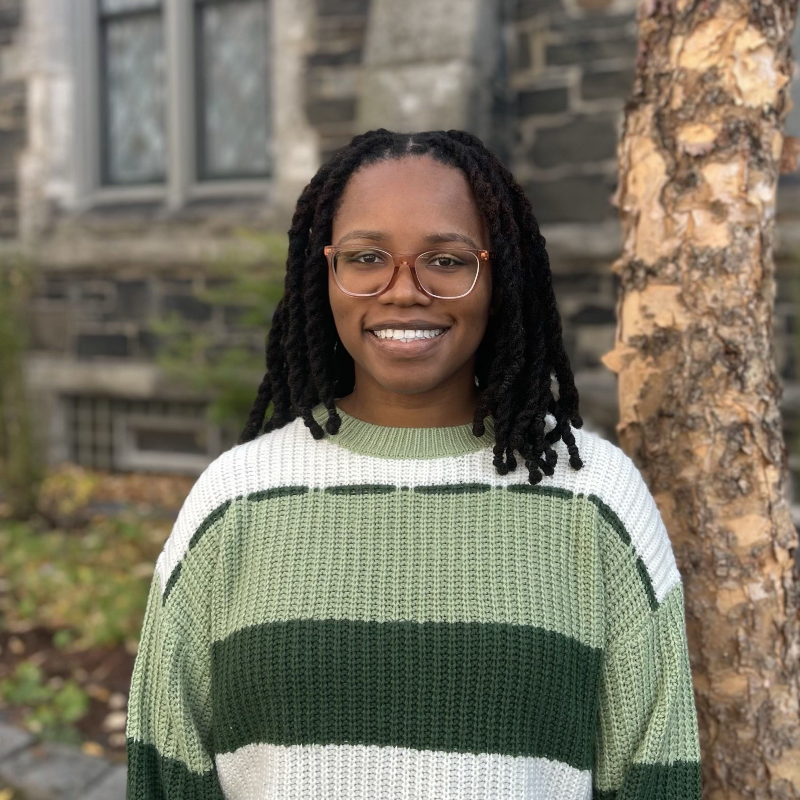
Fechi Inyama is a burgeoning science writer from Ewing, New Jersey. She is currently pursuing a PhD in microbiology and geobiology at MIT, exploring microbial evolution through deep time. She loves writing science stories about evolution, paleontology, and weird microbes. In her free time, she enjoys theater, dance, and trying to win over her roommate’s cat.
Thanks for reading
There are many ways you can help:
- Subscribe, if you haven't already!
- Share this post on Bluesky, Twitter/X, LinkedIn, Facebook, or wherever else you hang out online.
- Become a patron for the price of 1 cappuccino per month
- Drop a few bucks in my tip jar
- Send recommendations for research to feature in my monthly paper roundups to elise@reviewertoo.com with the subject line "Paper Roundup Recommendation"
- Tell me about your research for a Q&A post (email enquiries to elise@reviewertoo.com)
- Follow me on Bluesky
- Spread the word!